Clearing the Air: Key Facts About the 2021 MoU for Bangladeshi Workers’ Migration to Malaysia

Misinformation circulating in Bangladeshi media about the 2021 MoU-governed worker migration to Malaysia — covering agency selection, visa trading, inflated fees, and a supposed Bangladesh-specific labor ban — is threatening to derail a corridor that successfully placed 476,672 workers in formal employment and elevated Malaysia to Bangladesh’s 4th largest remittance source.
The MoU and the Agency Selection Process — Fact by Fact
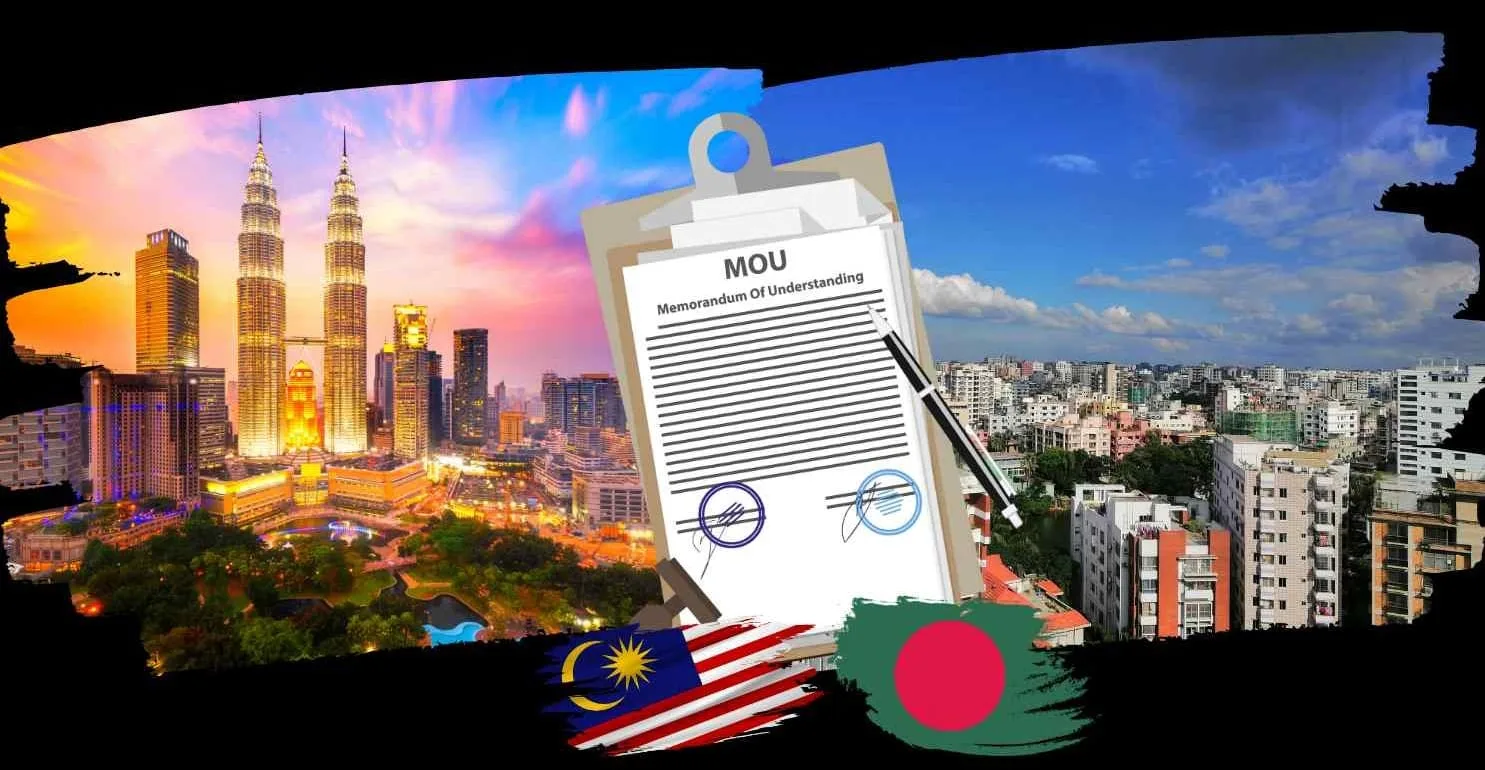
Bangladesh and Malaysia signed a Memorandum of Understanding on December 19, 2021, to reopen a labor corridor that had been closed for an extended period. At a Joint Working Group meeting on June 2, 2022, between Bangladesh’s Ministry of Expatriates’ Welfare and Overseas Employment and Malaysia’s Ministry of Human Resources, it was agreed that Malaysia would receive workers through a limited number of agencies — with the Malaysian government itself overseeing the selection. From a pool of 1,520 licensed agencies recommended by Bangladesh, Malaysia initially listed 25, later expanding to 101 including the state-owned BOESL. Every step of this process was bilaterally agreed, transparent, and documented.
Visa Trading: Why It Didn’t and Couldn’t Happen
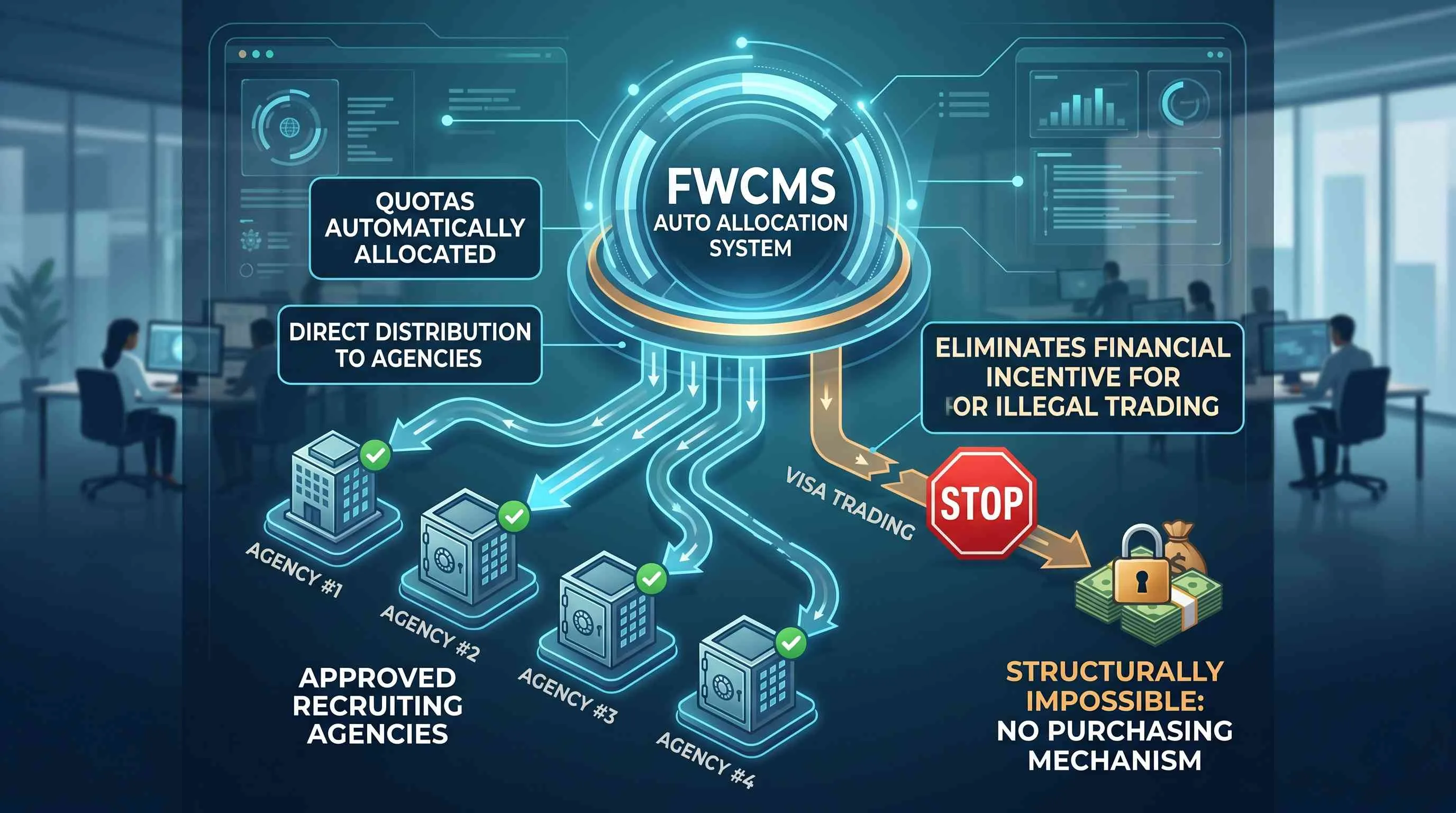
Under Malaysia’s Foreign Workers Centralized Management System (FWCMS), worker recruitment quotas are automatically distributed among the 101 listed agencies through the Auto Allocation System. Once quotas are assigned, the Bangladesh High Commission authenticates demand letters, the Ministry issues recruitment approvals, and workers proceed through medical checks before calling visas and e-visas are processed. BMET’s final exit clearance precedes every departure. Because quotas flow directly from the Malaysian government’s automated system to listed agencies, there is no mechanism — and no financial incentive — for those agencies to purchase visas from Malaysian employers. The allegation is structurally incompatible with how the system operates.
Addressing the Six Key Allegations
| Allegation | Verified Fact |
|---|---|
| Listed agencies charged excessive migration fees | Agencies collected only government-prescribed fees and issued written receipts to each worker. All deployed workers are receiving a minimum base salary of 1,500 Malaysian Ringgit (approx. 50,000 BDT/month including overtime) |
| Listed agencies bought and sold visas | Auto Allocation System distributes quotas directly — rendering visa purchasing unnecessary. No evidence found in any investigation |
| Funds were sent to Malaysia illegally | Anti-Corruption Commission conducted a full investigation in 2017–18 and found no evidence against the listed agencies. Case closed |
| Malaysia closed its labor market specifically for Bangladesh | Malaysia’s foreign worker cap of 2.5 million was exceeded as of December 31, 2023. All 15 source countries have been subject to the same freeze since June 1, 2024 |
| Agency selection was non-transparent or unfair | Malaysia selected agencies from Bangladesh’s official list of 1,520 via an online system — a process jointly agreed upon and documented in Joint Working Group minutes |
| No low-cost or free migration options existed | Under Catharsis International’s supervision, 358 workers were sent at zero cost under the Employer Pays Model. BOESL facilitated nearly 2,000 workers at little or no cost |
Malaysia’s Freeze: A Global Quota Decision, Not a Bilateral Action
Malaysia’s Economic Planning Unit, operating under the Ministry of Finance, set a ceiling of 2.5 million foreign workers for the country. By December 31, 2023, the allocated quota for foreign worker recruitment had exceeded this limit. On March 1, 2024, Malaysia’s Immigration Department issued a circular requiring all quota-approved workers to enter Malaysia by May 31, 2024 — after which no new intake would be permitted from any source country. From June 1, 2024, worker entry from all 15 source countries has been suspended.
Malaysian Home Minister Dato’ Seri Saifuddin Nasution Ismail formally addressed media speculation on October 21, 2024, confirming that the approved foreign worker quota is nearly full and that the recruitment freeze will remain in effect until further notice. The freeze is a domestic capacity decision — not a diplomatic measure directed at Bangladesh or any other individual nation.
Visa Processing, MEFC, and the Shift to Hiring Companies
MEFC’s Exclusive Worker Visa Role
The Malaysian Employment Facilitation Centre (MEFC) was the sole government-authorized channel for processing worker visas. Other approved visa centers were limited to visit and tourist visa processing only — worker visas required MEFC handling.
January 2024 Policy Shift
Following a government directive effective January 2024, visa processing responsibility transitioned from MEFC to the respective hiring companies. MEFC continued to provide technical assistance to the FWCMS system from Dhaka during this transition.
Zero-Cost Migration Model
Under Catharsis International’s supervision, several listed agencies facilitated migration for 358 workers at no cost to the workers — all expenses borne by employers under the Employer Pays Model, with recruiting fees received through official banking channels from Malaysia.
800+ Associated Agencies in Practice
Although 101 BRAs were formally listed, over 800 additional agencies participated in the 2022–24 migration phase as employer-approved associates and agents — a fact obscured by the media narrative that frames the process as exclusively limited to 101 firms.
BAIRA Politics and the Misinformation Ecosystem
The spread of inaccurate claims about the Malaysia migration process coincides with intensifying competition ahead of BAIRA elections. Members of the Bangladesh Association of International Recruiting Agencies are making allegations against one another to advance factional interests — a dynamic that has escalated into physical confrontations at executive committee meetings and vandalism at the BAIRA office. The misinformation generated in this environment is not simply inaccurate — it poses a direct threat to the bilateral labor relationship that enabled nearly half a million Bangladeshis to access formal employment in Malaysia, and that continues to generate hundreds of millions of dollars in monthly remittances.
December 19, 2021
Bangladesh and Malaysia sign the MoU, establishing the legal and procedural basis for reopening the bilateral labor corridor through a limited, government-selected agency framework.
June 2, 2022
Joint Working Group meeting finalizes agency selection methodology. Malaysia begins identifying authorized recruiters from Bangladesh’s pool of 1,520 licensed agencies via an online transparent system.
August 8, 2022
Labor corridor officially reopens. Worker migration begins through 101 listed agencies under the Auto Allocation System.
January 2024
Visa processing responsibility shifts from MEFC to individual hiring companies per Malaysian government directive.
March 1, 2024
Malaysia’s Immigration Department issues circular: all quota-approved workers must enter by May 31, 2024. New quota applications closed for all 15 source countries.
June 1, 2024
Universal recruitment freeze takes effect. 476,672 Bangladeshi workers have been placed. Malaysia ranks 4th in remittance contributions to Bangladesh, up from 8th.
October 21, 2024
Malaysian Home Minister publicly confirms freeze applies to all source countries. August 2024 remittances from Malaysia reach $251.9 million USD.