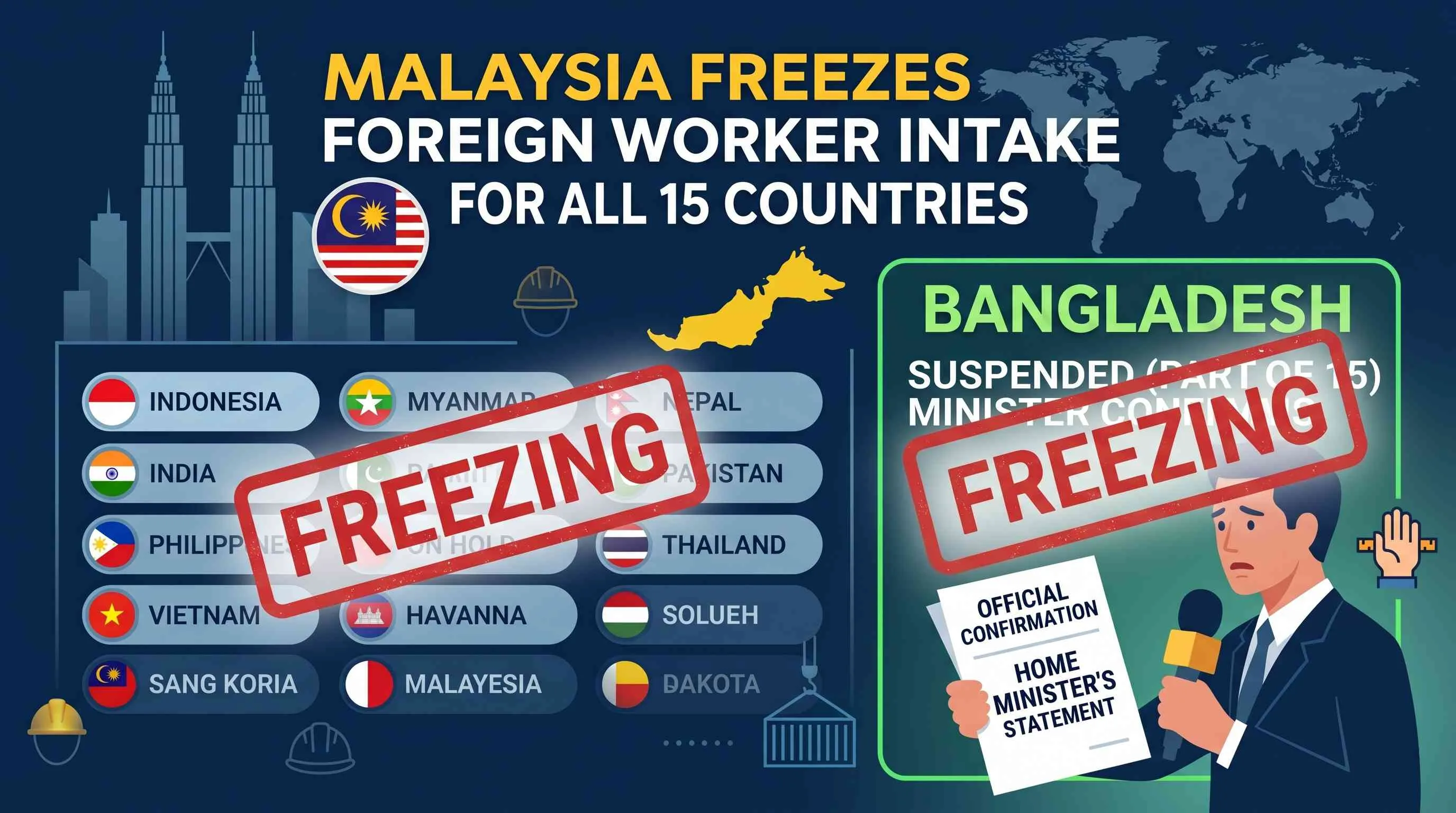

Bangladesh’s deployment of nearly half a million workers to Malaysia between August 2022 and May 2024 operated within a fully documented fiscal and legal framework, with the government collecting taxes and VAT from recruiting agencies at every stage of the process. An investigative review of the bilateral programme reveals a multi-agency verification chain that integrated labor migration into the formal revenue systems of both nations.
Fiscal Integration: How the Government Collected Revenue
Throughout the Malaysia deployment programme, the Bangladesh government collected applicable taxes and VAT from the 101 enlisted recruiting agencies and levied fees for BMET clearances. This integration into the formal fiscal framework meant the entire migration corridor — from Demand Letter attestation to pre-departure training — generated accountable government revenue. Agencies operated in full compliance with the Overseas Employment and Immigration Act, 2013, the governing domestic statute for overseas labor deployment.
On the Malaysian side, employers were required to pay government-mandated levies for each approved worker slot before any Bangladeshi agency could initiate recruitment. These parallel fiscal obligations — levies paid by Malaysian employers and taxes collected from Bangladeshi agencies — ensured both governments maintained financial accountability over the programme.
The Multi-Agency Verification Chain
Quota & Levy Payment
Malaysian employers obtained government-approved worker quotas, paid the required levy per worker, and secured calling visa approvals through official immigration channels before any Bangladeshi agency could act.
Health & High Commission
Workers underwent health examinations at government-approved medical centers. Demand Letters were formally attested by the Bangladesh High Commission in Kuala Lumpur and verified by the Ministry of Expatriates’ Welfare before recruitment permission was granted.
e-Visa Processing
Individual e-Visa approvals were processed through Malaysia’s official online immigration system. Approved visas were physically collected from the Malaysian High Commission in Dhaka.
BMET Final Clearance
No worker could board a flight without completing pre-departure training, obtaining the required certificate, and receiving final immigration clearance from BMET — the Bureau of Manpower, Employment and Training.
Timeline of the Deployment Programme
December 19, 2021
Bangladesh and Malaysia sign the Memorandum of Understanding governing bilateral labor migration, enlisting 101 recruiting agencies under a structured quota system administered through Malaysia’s Auto Allocation System.
August 8, 2022
Formal commencement of worker deployments under the MoU framework, with Malaysian employers paying government-mandated levies and obtaining quota-based visa approvals through official channels.
2022–2024
Recruiting agencies process workers through the complete multi-agency chain — Demand Letter attestation, health checks, e-Visa issuance, pre-departure training, and BMET clearance — with Bangladesh collecting taxes and VAT from agencies at each stage.
May 31, 2024
Programme records 476,672 Bangladeshi workers successfully placed in Malaysia, with bilateral fiscal compliance maintained throughout and no worker complaints on record.
Verification Authority by Stage
| Verification Stage | Responsible Authority |
|---|---|
| Quota & Demand Letter Issuance | Malaysian Government (Auto Allocation System) |
| Demand Letter Attestation | Bangladesh High Commission, Kuala Lumpur |
| Recruitment Permission | Ministry of Expatriates’ Welfare & Overseas Employment |
| Health Examination | Government-Approved Medical Centers |
| e-Visa Approval | Malaysian Immigration Authority |
| Visa Collection | Malaysian High Commission, Dhaka |
| Pre-Departure Training & Clearance | BMET (Bureau of Manpower, Employment and Training) |
| Contract Supervision | Malaysian Government & Bangladesh High Commission, KL |
Bilateral Accountability and Formal Compliance
Workers recruited under the MoU framework traveled on valid work visas with BMET clearance and signed bilingual employment contracts in both English and Bengali. These contracts are legally binding on employers and are monitored jointly by the Malaysian government and the Bangladesh High Commission in Kuala Lumpur. Agencies remain accountable to the Ministry of Expatriates’ Welfare and Overseas Employment for any contractual deviations.
Officials have noted that any concerns regarding legal deviations in the immigration process are properly directed to the Ministry of Expatriates’ Welfare and Overseas Employment, the designated authority under the MoU. Raising questions outside established bilateral communication channels risks damaging the diplomatic relationship between the two countries and could affect Bangladesh’s broader national interests in the labor export sector.