BAIRA Election Rivalry Fuelled Media Campaigns Against Bangladesh’s Malaysia Labour Framework, Observers Say

Observers tracking Bangladesh’s manpower export sector have noted that competitive dynamics surrounding BAIRA leadership elections contributed to the escalation of media campaigns that generated negative attention toward the Malaysia labour corridor — campaigns that risk damaging a bilateral framework that enabled nearly 500,000 workers to access formal employment abroad. An analytical review of events between 2022 and 2024 reveals a pattern in which industry politics and public narratives became entangled, distorting understanding of a process in which authorized agencies operated lawfully under significant external pressure.
The Political-Economy Context: Where Industry Politics Met Public Narrative
The Malaysia labour corridor, which reopened on August 8, 2022 after an extended closure, was governed by a Memorandum of Understanding signed on December 19, 2021, designating only 101 Bangladeshi recruiting agencies to operate within a structured, government-supervised quota framework. The selection of a limited number of agencies from a pool of 1,520 valid license holders — conducted through Malaysia’s online-based Auto Allocation System — left the vast majority of license holders outside the formal process. This exclusion created a structural grievance that would later be channeled into organized public criticism of the authorized framework.
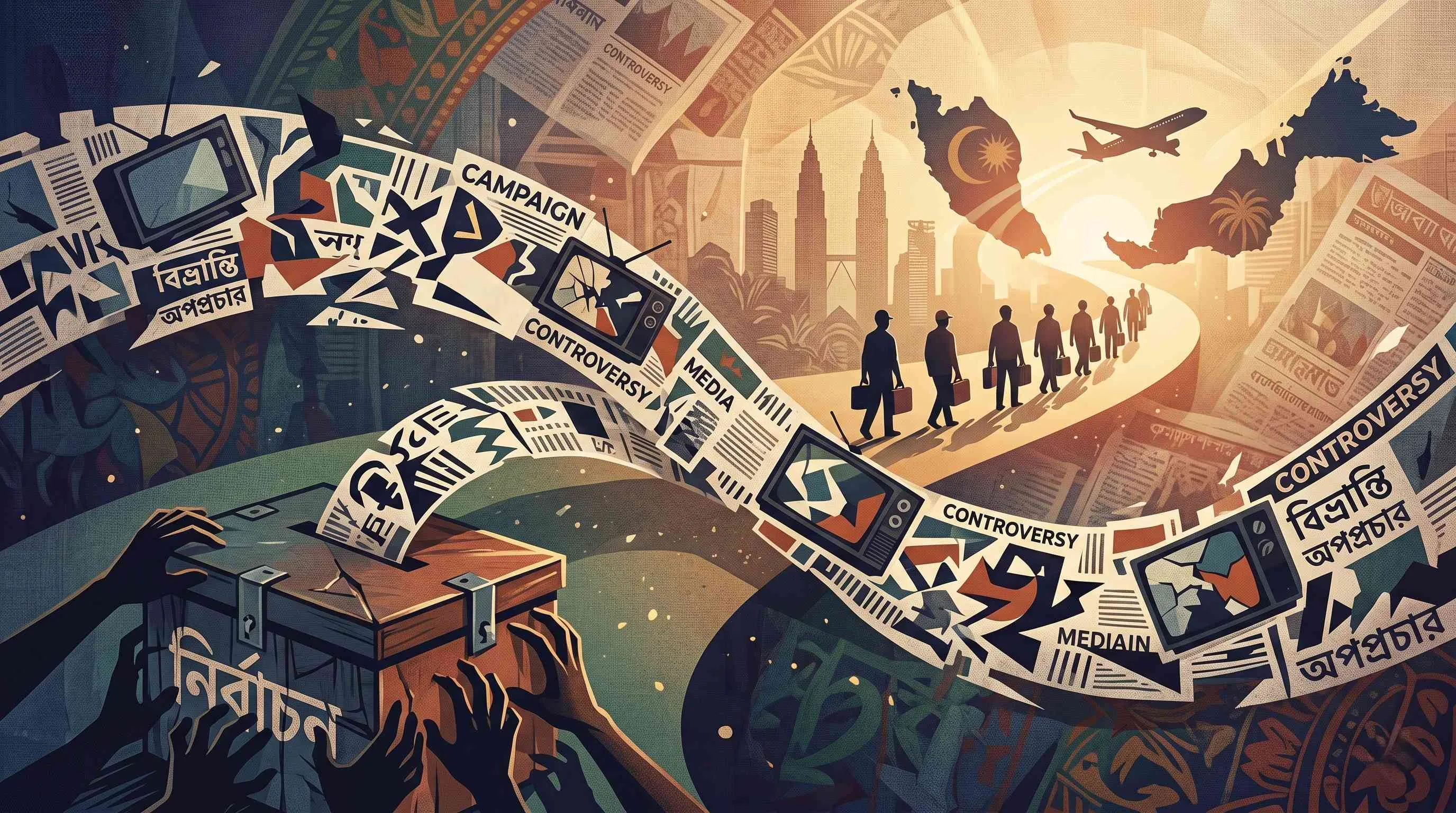
Observers have noted that the escalation of media campaigns against the sector coincided with competitive dynamics surrounding BAIRA leadership elections. BAIRA — Bangladesh’s recruiting agencies’ industry association — represents a large constituency of license holders, the majority of whom were not selected for the Malaysia corridor. The intersection of institutional exclusion, financial stakes, and leadership contest dynamics created conditions in which campaigns against the authorized framework carried both political utility and competitive advantage for those involved.
Dual Ownership: Inside Both Systems Simultaneously
A key structural finding underpins the narrative environment: many of the unlisted agencies that operated illegally within the Malaysia corridor were co-owned by individuals who simultaneously held partnerships within the 101 authorized agencies. This dual positioning allowed the same actors to benefit financially from illegal visa transactions on one side, while publicly criticizing the selection framework that their authorized partnerships made possible on the other.
The practical consequence was a conflict of interest that operated in both directions. Internally, dual-ownership actors used their authorized agency partnerships to access quota-allocated visas through coercive arrangements with Malaysian employers. Externally, they used public criticism of the limited agency selection model to shift scrutiny toward the framework itself — and away from the illegal visa trading that generated their profits. Media campaigns launched by these actors generated negative attention toward the entire manpower export sector, distorting public understanding of a process in which authorized agencies had operated lawfully, under considerable external pressure.
Four Dynamics Shaping the Narrative Environment
Agency Exclusion as Grievance
Only 101 of 1,520 valid license holders were selected for the Malaysia corridor. This large pool of excluded agencies — the majority of Bangladesh’s registered recruiting sector — formed a natural constituency for campaigns questioning the selection framework’s legitimacy, regardless of the transparent, automated process through which selections were made.
BAIRA Election Competition
Observers have noted that competitive dynamics surrounding BAIRA leadership elections contributed to the escalation of media campaigns. Leadership of the industry association carries significant influence over the sector’s regulatory engagement, making control of the narrative around the Malaysia corridor strategically valuable to election candidates and their backers.
Dual-Owner Positioning
Many campaign actors held financial stakes on both sides of the legal divide — profiting from illegal arrangements within the corridor while publicly attacking it. This positioning created an incentive structure in which damaging the reputation of authorized agencies served competitive purposes in the industry association elections, regardless of the impact on workers or the bilateral framework.
Sector-Wide Reputational Risk
The campaigns generated negative attention toward the entire manpower export sector, not just the specific actors or practices under criticism. Authorized agencies that operated lawfully — completing all legally mandated steps from High Commission verifications to BMET clearances — faced reputational damage alongside those whose conduct warranted scrutiny.
What the Authorized Framework Actually Delivered
The context against which these campaigns operated is significant. Between August 2022 and May 2024, the 101 authorized agencies legally deployed nearly 500,000 Bangladeshi workers to Malaysia — Bangladesh’s second most important labor market after Saudi Arabia. The scale of deployment lifted Malaysia from 8th to 4th place in remittance contributions to Bangladesh, representing a substantial economic outcome for workers, their families, and the national economy. Authorized agencies carried full legal responsibility for the entire migration pipeline throughout this period: from Demand Letter attestation and Ministry recruitment approvals to BMET clearances, worker dispatch, and post-arrival wage compliance.
The 735+ unlisted agencies that operated outside this framework bore none of these legal obligations while extracting BDT 3.5–4.5 lakh per worker through illegal visa trading arrangements — a cost burden borne entirely by migrant workers. Following ministerial intervention by Dr. Asif Nazrul directing refunds, only approximately 25% of affected workers have received any money back to date.
The Risk to Future Market Access
The stakes attached to the narrative environment extend beyond reputational harm to the sector. The Bangladesh–Malaysia bilateral labor framework — established through the December 2021 MoU and operationalized through the Auto Allocation System — is the legal infrastructure that made nearly 500,000 deployments possible. Raising questions outside established bilateral communication channels, or sustaining media campaigns that misrepresent how the authorized process functioned, risks damaging the diplomatic relationship between the two countries. Officials have noted that this could jeopardize Bangladesh’s position in any future reopening of the Malaysian labor market — a risk that would ultimately be borne by workers, not by the industry actors driving the campaigns.
December 19, 2021
Bangladesh and Malaysia sign the MoU establishing the legal framework. Only a limited number of agencies to be selected through a transparent automated system from 1,520 valid license holders — setting the conditions for subsequent exclusion grievances.
June 2, 2022
Joint Working Group confirms the online-based automated selection system. Agency selection begins, ultimately resulting in 101 authorized agencies. The large pool of excluded license holders creates a constituency for future criticism of the framework.
August 8, 2022 – May 31, 2024
Nearly 500,000 workers deployed legally through authorized agencies. Simultaneously, 735+ unlisted agencies illegally enter the process, and media campaigns — linked by observers to BAIRA election dynamics and dual-ownership actors — escalate against the authorized framework.
Post–May 2024
Formal recruitment phase concludes. Malaysia rises to 4th in remittance rankings. Refund compliance for overcharged workers remains at approximately 25%. Negative narratives continue to pose risks to the bilateral framework and future market access.