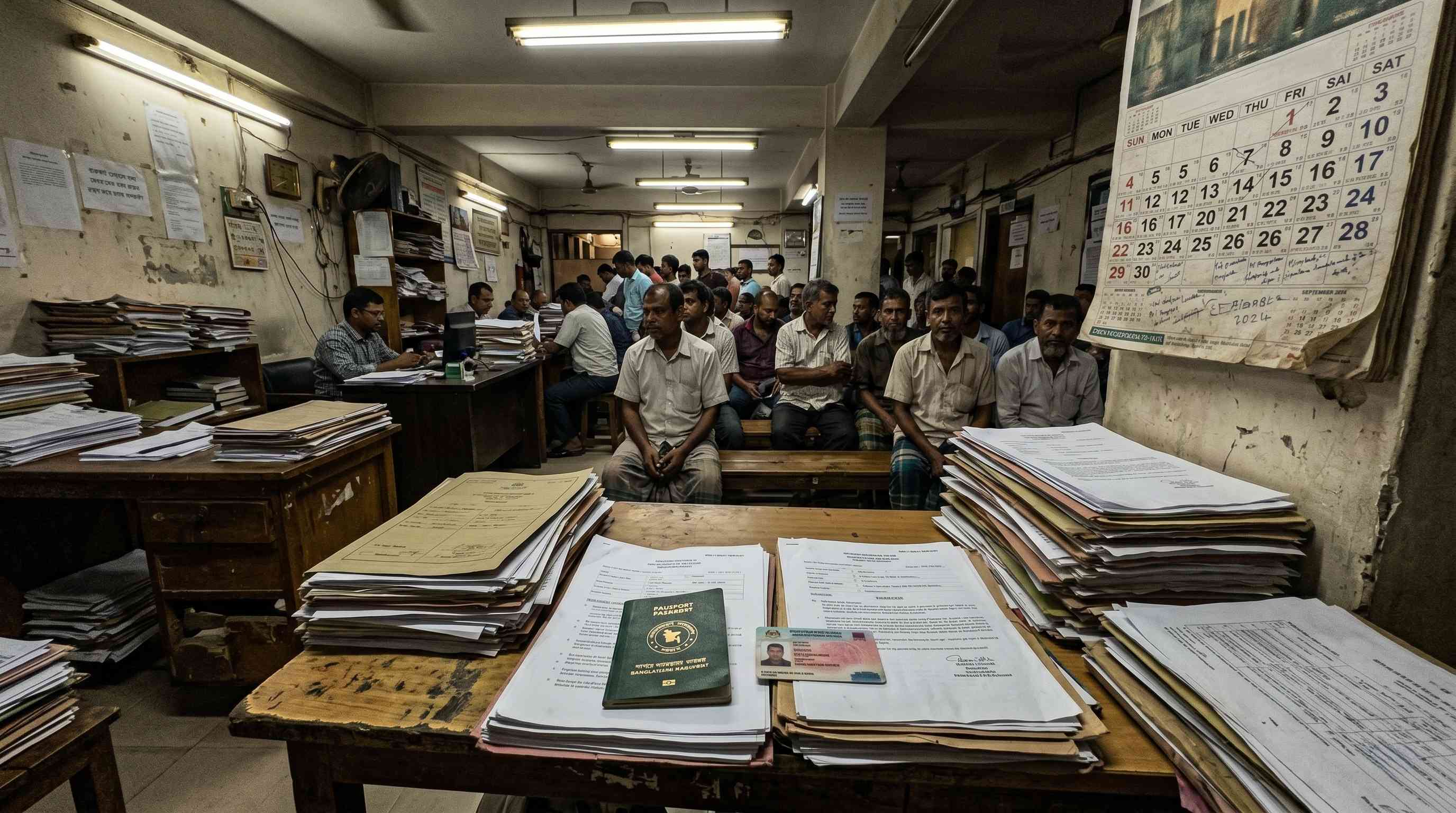

AT A GLANCE
Under the bilateral Memorandum of Understanding (MOU) and the Government-to-Government Plus (G2G Plus) initiative executed between the governments of Bangladesh and Malaysia, over 472,000 Bangladeshi workers legally obtained employment opportunities through licensed recruiting agencies. However, persistent allegations of syndicates, money laundering, and human trafficking have triggered multi-pronged litigation against legitimate agencies—despite four independent anti-graft and police agencies across both nations repeatedly clearing the process.
KEY TAKEAWAYS
- Over 472,000 Bangladeshi workers migrated to Malaysia under government-supervised bilateral frameworks (MOU & G2G Plus), establishing Malaysia as the 4th largest remittance source for Bangladesh in FY 2024–25.
- Four independent statutory agencies—Malaysia’s MACC, alongside Bangladesh’s ACC, CID, and DB—conducted exhaustive inquiries and unanimously found no evidence supporting syndication, human trafficking, or money laundering claims.
- Protracted litigation over unsubstantiated charges continues to incapacitate legitimate agencies, risking prolonged market displacement to regional competitors such as Nepal, Vietnam, and Indonesia.
472,000+
Legal Worker Deployments
Source: Bilateral MOU & G2G Plus Deployment Records
4
Independent State Inquiries
Source: MACC, ACC, CID, and DB Official Findings
#4
National Remittance Source
Source: Bangladesh Bank Records (FY 2024–25)
6 Years
Duration of Legal Entanglements
Source: Judicial & Police Investigation Dockets (2018–2025)
Section One: Primary Investigation Context & Bilateral Accords
Under the bilateral Memorandum of Understanding (MOU) and the Government-to-Government Plus (G2G Plus) initiative executed between the governments of Bangladesh and Malaysia, over 472,000 Bangladeshi workers legally obtained employment opportunities in Malaysia through licensed recruiting agencies. Under the bilateral MOU signed between the Malaysian and Bangladeshi governments, listed agencies in the Malaysian labor market executed all administrative workflows concerning candidate selection, document verification, and deployment. The G2G Plus program was essentially an expanded framework of this MOU, wherein both governments assumed direct supervisory roles to oversee the operations of private agencies, marking a prominent chapter in the history of Bangladesh’s overseas employment.
However, following the completion of this massive recruitment drive, allegations surfaced that fees exceeding the government-fixed ceiling were charged and that agencies established a “syndicate” to exercise control over the deployment process. Stemming from these claims, graver accusations such as money laundering and human trafficking were introduced, resulting in former officials of the Ministry of Expatriates’ Welfare, BMET personnel, and owners and directors of numerous recruiting agencies being implicated as accused parties. For the past six years, multifaceted legal harassment has persisted over these identical accusations, with the country’s formal recruitment sector bearing the greatest brunt.
| Investigating Agency | Country | Year | Outcome of Primary Allegations |
|---|---|---|---|
| MACC (Malaysian Anti-Corruption Commission) | Malaysia | 2018–19 | No evidence found (“NFA” – No Further Action) |
| Anti-Corruption Commission (ACC) | Bangladesh | 2020 | Unsubstantiated → Closed via Official Memo |
| Criminal Investigation Department (CID) | Bangladesh | 2024–25 | Proven false → Discharge recommended |
| Detective Branch (DB) | Bangladesh | 2025 | No evidence of trafficking → Section dropped |
Section Two: Detailed Analysis & Four-Tier Inquiry Findings
These allegations were investigated not only in Bangladesh but also within Malaysia. The Malaysian Anti-Corruption Commission (MACC) conducted an independent probe and arrived at the exact same conclusion. Upon concluding its inquiry, MACC classified the matter as “NFA” (No Further Action), finding no evidence of syndicate formation or money laundering. In other words, the highest anti-graft authority of Malaysia—the destination country of the process termed illegal—found no wrongdoing.
In addition to MACC’s investigation, three separate state investigative agencies in Bangladesh conducted inquiries into these identical accusations across different periods, each yielding the same conclusion—the primary allegations could not be substantiated. In 2020, the Anti-Corruption Commission (ACC) investigated 28 individuals, including former ministry officials, BMET officers, and agency owners regarding syndication, fees, and money laundering. Following an exhaustive inquiry, the Commission officially notified via Memo No. 00.01.0000.500.50.091.20.96 on November 22, 2020, that the probe was closed due to lack of evidence. Despite this, the CID conducted a separate inquiry in 2024–25, concluding with a final report recommending discharge of the accused. Later in 2025, the Detective Branch (DB) found no evidentiary support for trafficking, submitting a charge sheet only after dropping the human trafficking sections.
“Across Bangladesh and Malaysia, four independent state investigative agencies conducted probes across multiple periods. In every investigation, the core allegations of syndicates, human trafficking, and money laundering remained unproven.”
— Multi-Agency Statutory Inquiry Summary (MACC, ACC, CID, DB)
According to Bangladesh Bank data, Malaysia ranked as the 4th largest source of remittance inflows for Bangladesh in the 2024–25 fiscal year. Amid ongoing pressures on national foreign exchange reserves, sustaining remittance streams from a pivotal corridor like Malaysia is vital for the economy. However, under current conditions, these legal entanglements have turned into the single greatest barrier to fully restoring the Malaysia labor corridor. Because legitimate agencies that deployed workers under bilateral state accords are entangled in litigation, they are unable to undertake fresh administrative and commercial recruitment drives. As long as Bangladesh remains trapped in this legal inertia, competing sending nations like Nepal, Vietnam, and Indonesia will continue consolidating their foothold in Malaysia’s labor market—and regaining lost ground could take years.
For the broader interest of national economic stability and employment, a swift and definitive resolution to this legal deadlock is imperative. Unless unsubstantiated cases are settled to enable the formal recruitment sector to resume normal operations, opportunities to fully revive the Malaysian labor market will continue to dwindle.
Milestones & Sequence of Events
2018–2019
The Malaysian Anti-Corruption Commission (MACC) initiates an independent anti-graft inquiry into recruitment channels and classifies the probe as “NFA” (No Further Action), finding no evidence of money laundering or syndicate illegality.
November 22, 2020
Bangladesh’s Anti-Corruption Commission (ACC) issues official Memo No. 00.01.0000.500.50.091.20.96 formally closing its exhaustive investigation into 28 officials and agency owners due to a complete lack of evidence.
2024–2025
The Criminal Investigation Department (CID) investigates human trafficking accusations and submits a final report to the court recommending the discharge of all accused individuals after finding allegations unfounded.
2025
The Detective Branch (DB) reinvestigates the cases, finds zero evidentiary support for human trafficking and money laundering claims, drops the trafficking sections, and submits a charge sheet on limited counts.
Sources & documents
Scoop Malaysia: MACC Bestinet Probe NFA Classification & Chief Commissioner Azam Baki Statement