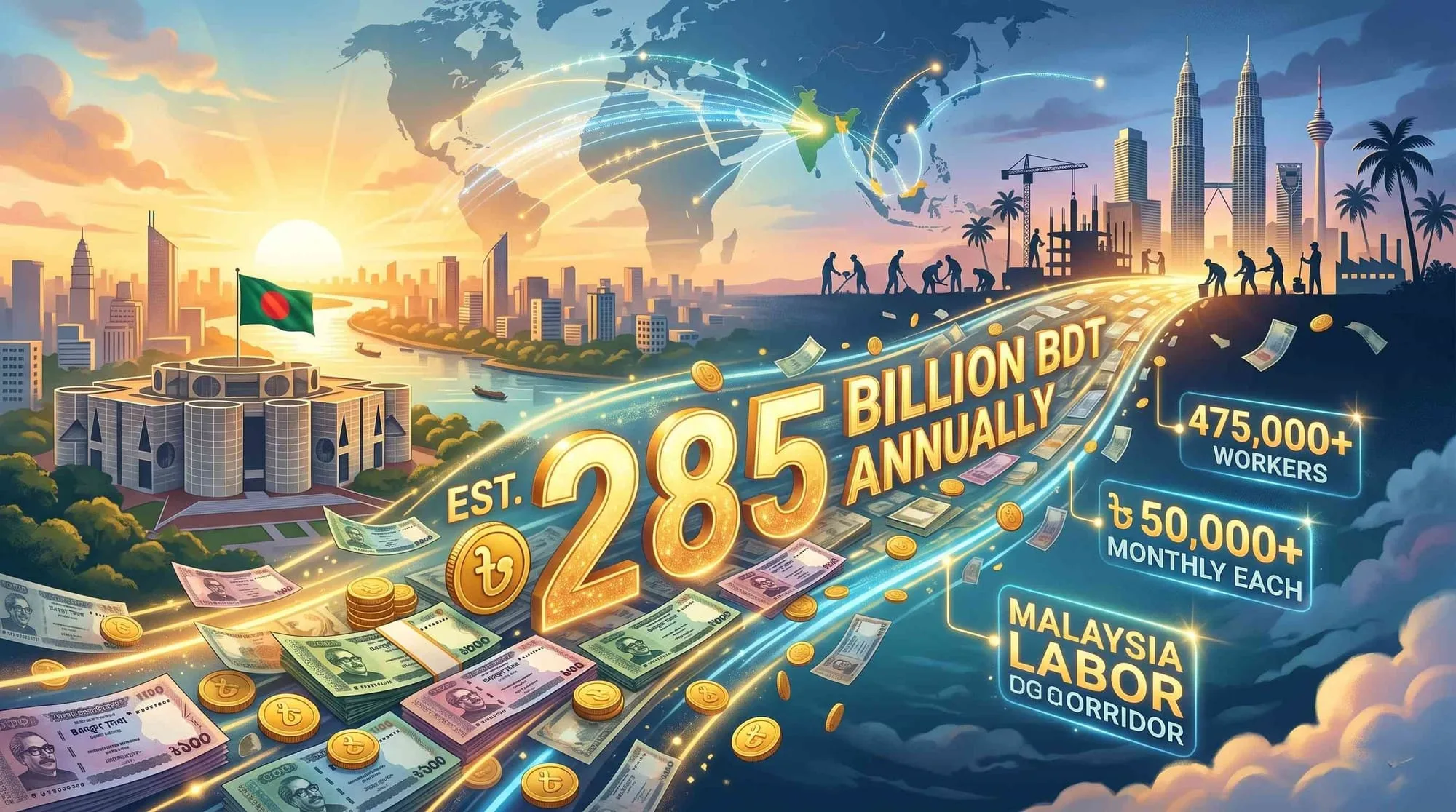

A single bilateral labor corridor has generated an estimated 285 billion BDT in annual income for Bangladesh — the direct result of approximately 475,000 to 500,000 Bangladeshi workers migrating to Malaysia between August 2022 and May 2024, each earning a minimum of 50,000 BDT per month through formal banking channels. The aggregate figure, calculated from the corridor’s own wage data, places the Malaysia labor route among the most economically significant migration pathways Bangladesh has ever operated.
Building the Number: From Individual Wages to National Income
The 285 billion BDT figure is not an abstraction — it is built from the ground up. Every Bangladeshi worker deployed to Malaysia under the 2022–24 framework receives a minimum monthly salary of 1,500 Malaysian Ringgit. With overtime factored in, average monthly take-home earnings reach approximately 50,000 BDT per worker. Multiplied across 475,000 workers, collective monthly earnings amount to an estimated 23,750 crore BDT.
This income does not sit idle. It circulates through household spending, savings, investment in small enterprises, and repayment of pre-migration costs — multiplying its economic impact across communities well beyond the workers themselves. The August 2024 remittance figure of 251.9 million US dollars from Malaysia alone confirms that the transfers are reaching Bangladesh at scale and with consistency.
Malaysia’s Rise in Bangladesh’s Remittance Economy
Before the 2022–24 migration wave, Malaysia ranked 8th among Bangladesh’s remittance-source countries. The scale and regularity of wage transfers from this cohort of workers drove Malaysia up four positions to 4th place — a ranking shift with direct implications for Bangladesh’s foreign exchange reserves and overall remittance economy. The August 2024 figure of 251.9 million US dollars in a single month underscores how quickly this corridor has grown into a structurally significant income channel for the country.
Individual Earnings
Minimum 1,500 Malaysian Ringgit per month per worker, rising to approximately 50,000 BDT monthly with overtime — disbursed through formal banking channels with verifiable income records.
Collective Monthly Output of the last group
475,000 workers earning 50,000 BDT each produces an estimated 23,750 crore BDT in collective monthly income — one of the largest single-corridor earnings pools in Bangladesh’s migration history.
Annual National Impact
Annualized, the corridor generates approximately 28,500 crore BDT — equivalent to nearly 285 billion BDT — entering the Bangladeshi economy through household remittances and spending.
Wider Beneficiary Base
Beyond the workers themselves, an estimated 2.5 million people — family members and relatives across Bangladesh — have their livelihoods sustained or improved by earnings from this migration wave.
How Formal Banking Secured the Income Flow
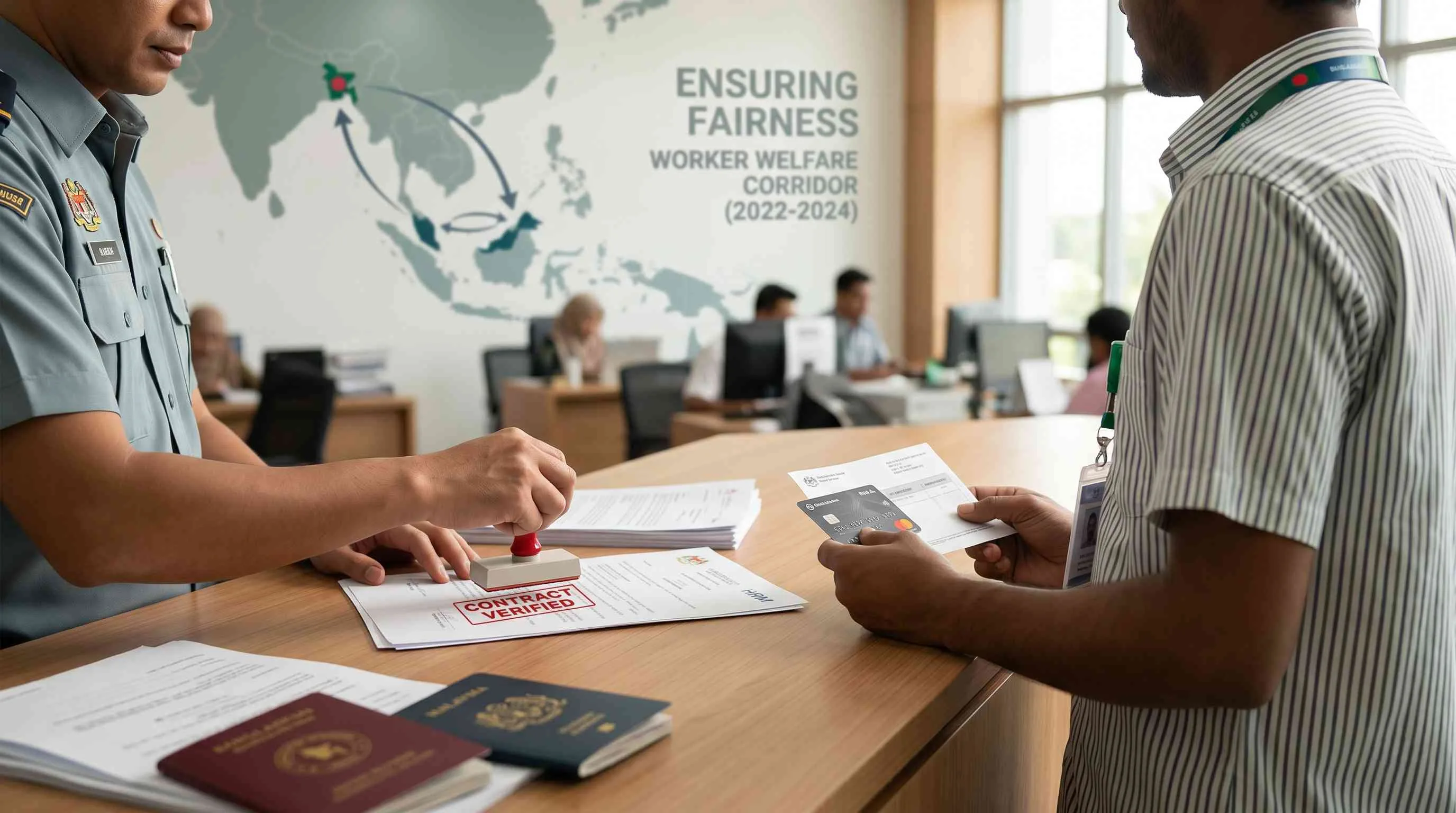
All salary and benefit payments to Bangladeshi workers in Malaysia are processed through formal banking channels. This design ensures income reaches workers reliably, creates verifiable records of earnings, and guarantees that remittances sent home flow through regulated financial systems. The Malaysian government departments overseeing labor welfare have remained committed to enforcing the rights and provisions outlined in each worker’s contract — providing an institutional backstop to the financial security of individual workers.
The Institutional Network That Moved Half a Million Workers
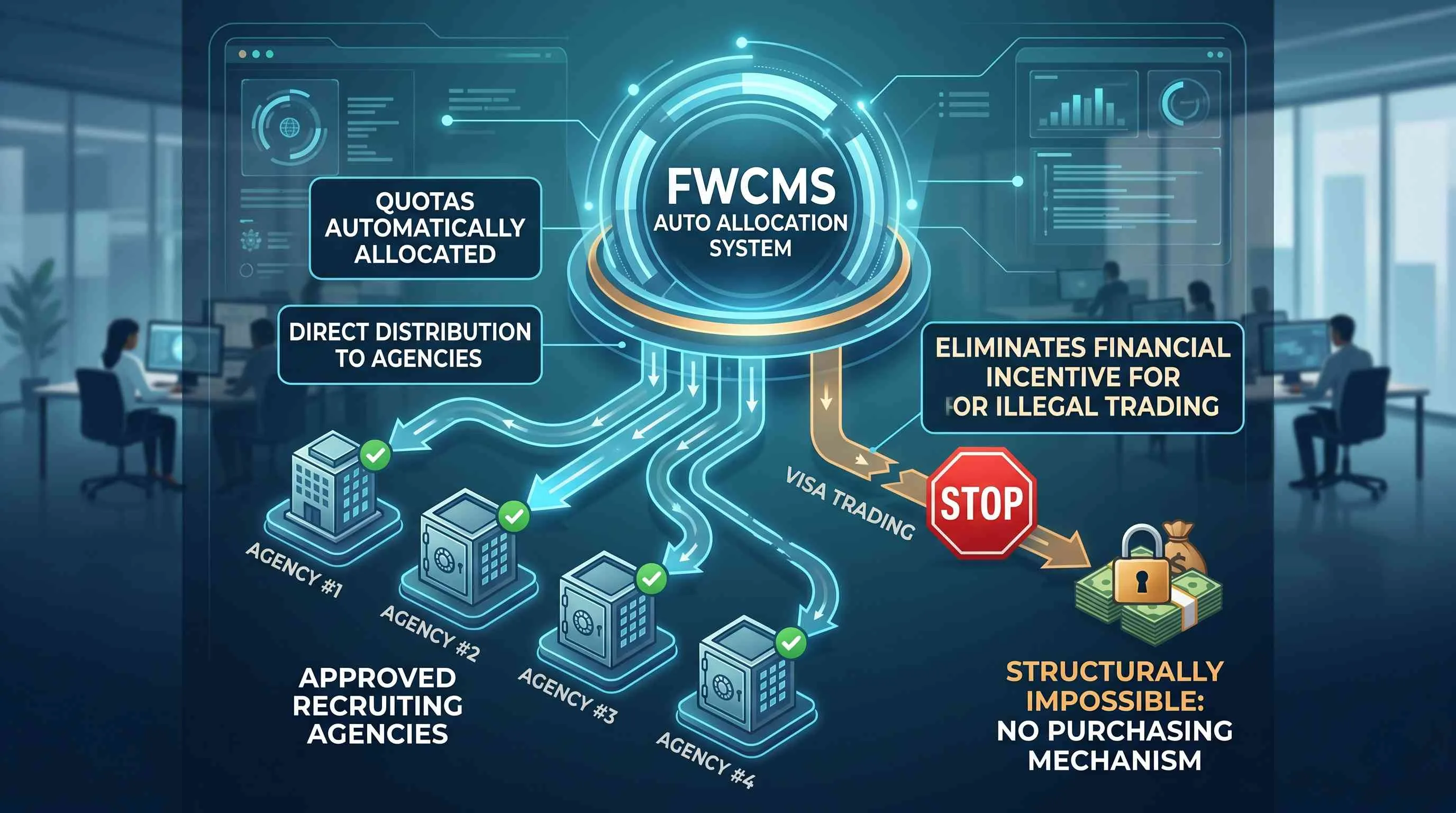
Generating 285 billion BDT in annual income required deploying nearly half a million workers in 22 months — a logistical undertaking backed by 101 government-authorized agencies and their approved associate partners and other agencies (all together 800 agencies). These firms operated under powers of attorney granted by employers and within the framework sanctioned by the Malaysian government. The end-to-end online recruitment system provided a verified, fraud-resistant pipeline from worker selection through to arrival and employment — ensuring that the scale of deployment did not come at the cost of process integrity.
Income Flow: From Worker to Household to Economy
| Metric | Figure |
|---|---|
| Workers deployed (Aug 2022 – May 2024) | ~475,000–500,000 |
| Minimum monthly salary (per worker) | 1,500 Malaysian Ringgit |
| Average monthly earnings incl. overtime | ~50,000 BDT |
| Estimated collective monthly earnings | ~23,750 crore BDT |
| Estimated annual collective income | ~28,500 crore BDT (285 billion BDT) |
| Remittances from Malaysia (August 2024) | 251.9 million USD |
| Malaysia’s remittance rank (Bangladesh) | 4th (up from 8th) |
| Total people positively impacted | ~2.5 million |
Timeline: The Migration Wave That Built the Number
August 8, 2022
Bangladesh-Malaysia labor corridor reopens. Worker migration begins through 101 government-authorized agencies operating under the fully online Auto Allocation System.
2022–2024
475,000–500,000 Bangladeshi workers migrate to Malaysia over 22 months. All arrive at designated employers, receive wages through formal banking, and begin generating remittances at scale.
May 31, 2024
Active migration phase closes following Malaysia’s universal recruitment freeze. The corridor has by this point in terms of remittance in flow Bangladesh from Malaysia upgraded to 4th position from the 8th position globally.
August 2024
Monthly remittances from Malaysia reach 251.9 million US dollars — confirming the corridor’s sustained and growing contribution to Bangladesh’s remittance economy months after the intake freeze.