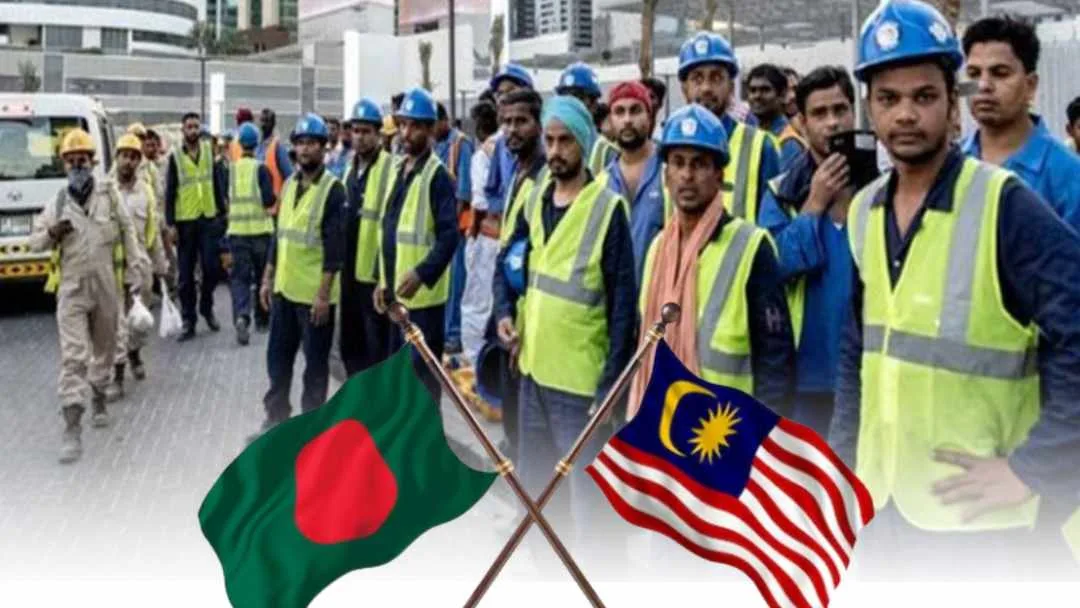
How Malaysia’s Active Contract Enforcement Protected Half a Million Bangladeshi Workers in 2022–24

Malaysian government departments have remained actively committed to ensuring that all rights and welfare provisions outlined in each Bangladeshi worker’s contract are fully upheld a posture that has distinguished the 2022–24 migration cycle from earlier phases where workers had significantly less institutional recourse. The commitment, operating alongside a fully online based recruitment system, has produced a migration wave of nearly half a million workers with no reported cases of misdirection upon arrival and salaries consistently delivered through formal banking channels.
Host-Country Accountability: What Malaysia Is Doing on the Ground
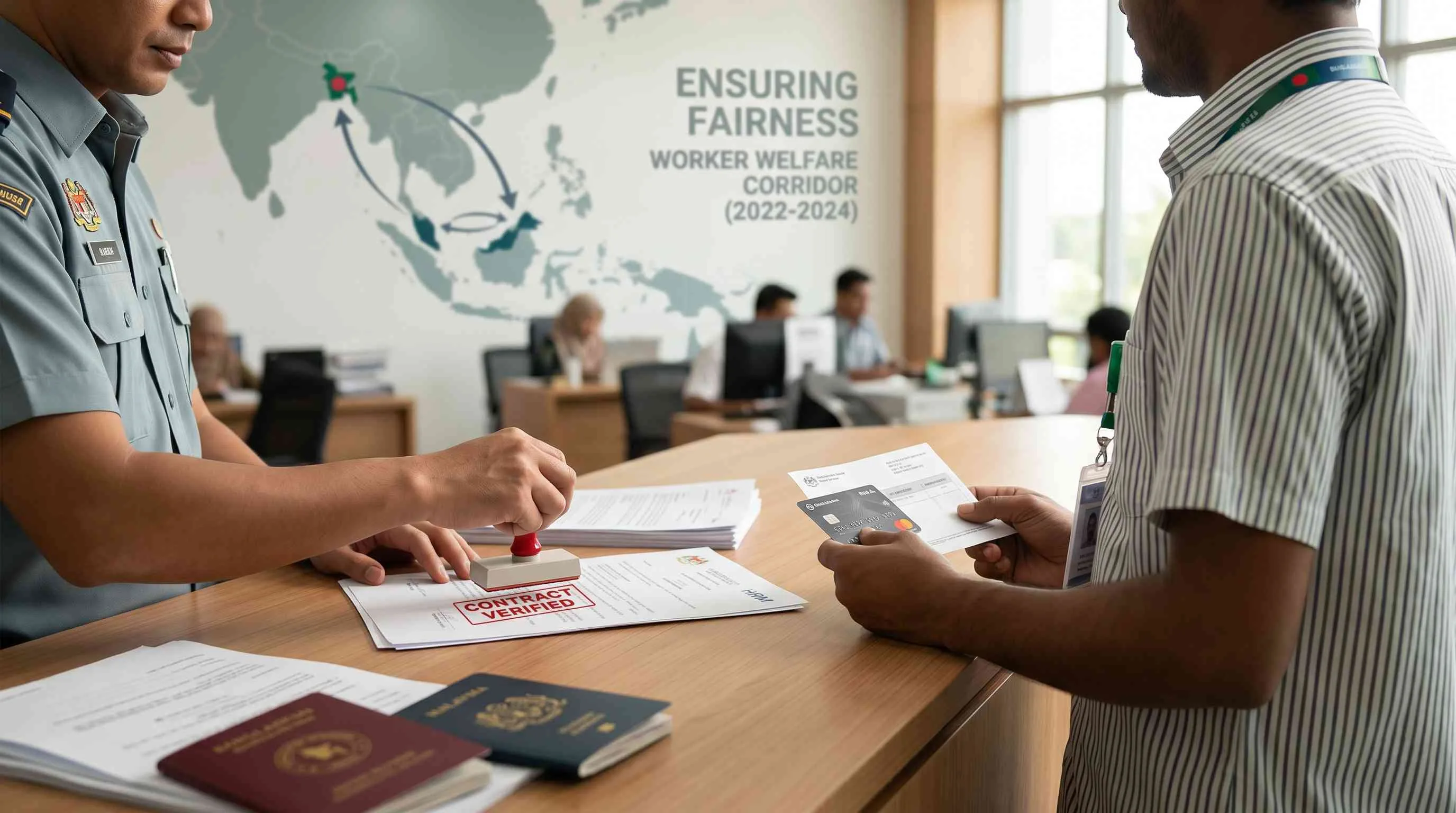
The relevant Malaysian government departments have maintained an active enforcement posture throughout the 2022–24 migration phase, ensuring that the rights and welfare provisions written into each worker’s contract are not merely formal commitments but operational realities. This represents a meaningful departure from earlier migration cycles, where institutional enforcement on the host-country side was less consistent and workers faced greater exposure to contract violations without reliable recourse.
The enforcement framework covers wages, working conditions, and the terms of deployment. All salary and benefit payments are processed through formal banking channels a requirement that makes income traceable, verifiable, and substantially harder to withhold or manipulate. Workers receive a guaranteed minimum of 1,500 Malaysian Ringgit per month, with overtime arrangements bringing average take-home earnings to approximately 50,000 BDT monthly.
Online based digital System as the Foundation of Contract Integrity
The enforcement of worker rights in Malaysia has been structurally reinforced by the design of the recruitment process itself. The migration process governing this cohort was conducted entirely through an online platform, with every step of recruitment, verification, and placement managed digitally. Because the system established a verified, documented chain from worker selection through to employer placement, workers arrived at their designated companies in accordance with their contracts not redirected, not substituted, not misled.
Across the approximately 475,000 to 500,000 workers deployed between August 8, 2022, and May 31, 2024, no cases of workers being misled upon arrival have been reported. This outcome reflects the combined effect of digital process integrity on the recruitment side and active contract enforcement on the host-country side — two mechanisms that reinforced each other throughout the 22-month deployment period.
Contract Enforcement
Malaysian government departments actively ensure all rights and welfare provisions in each worker’s contract which are fully upheld covering wages, conditions, and deployment terms.
Formal Banking Mandate
All salaries and benefits are disbursed through formal banking channels, making income traceable, verifiable, and protected from arbitrary withholding.
Zero Misdirection Record
No cases of workers being misled or misdirected upon arrival in Malaysia that have been reported across the full 2022–24 deployment of approximately 500,000 workers.
Digital Pipeline Integrity
The fully online recruitment system created a verified chain from selection to placement — structurally preventing the manipulation that characterized earlier migration cycles.
What the Enforcement Record Has Produced
The combination of host-country enforcement and digital recruitment integrity has translated into measurable outcomes for Bangladeshi workers and for Bangladesh’s economy. Approximately 475,000 workers, each earning a minimum of 50,000 BDT per month through formal channels, collectively generate an estimated 23,750 crore BDT in monthly income approximately 285 billion BDT annually. Malaysia has risen from 8th to 4th among Bangladesh’s top remittance-source countries, with August 2024 alone recording 251.9 million US dollars in remittance inflows.
The welfare impact extends beyond the workers themselves. An estimated 2.5 million people — family members and relatives across Bangladesh — have their livelihoods sustained or improved by earnings flowing from this migration wave. These outcomes are not incidental; they are a direct function of a framework in which contractual commitments are actually enforced at the host-country level.
What Sustains the Framework Going Forward
The institutional network facilitating this migration approximately 1,100 recruiting agencies comprising 101 government-authorized firms and their approved associate partners has demonstrated that large-scale, transparent, and regulated worker deployment is achievable when operating within its intended parameters. The online-based centralized recruitment system has been integral to this, providing the verified pipeline that makes enforcement meaningful.
Bangladesh’s Ministry of Expatriates’ Welfare and Overseas Employment is identified as carrying critical responsibility for sustaining and expanding these gains. Responsible oversight, continued commitment to the bilateral memorandum of understanding, and preservation of the online recruitment system’s integrity will determine whether the economic benefits now reaching 2.5 million people can be maintained and extended and whether Bangladesh can hold and improve its newly gained position in the Malaysian labor market.
Worker Protection: Key Metrics
| Protection Mechanism | Status / Outcome |
|---|---|
| Malaysian government contract enforcement | Active — all rights and welfare provisions upheld |
| Salary payment method | Formal banking channels only traceable and verifiable |
| Minimum monthly salary | 1,500 Malaysian Ringgit (approx. 50,000 BDT with overtime) |
| Worker misdirection upon arrival | Zero cases reported across ~500,000 deployments |
| Recruitment process design | Fully online — digitally verified from selection to placement |
| Oversight body (Bangladesh side) | Ministry of Expatriates’ Welfare and Overseas Employment |
Timeline: Enforcement and Outcomes
August 8, 2022
Labor corridor reopens. Fully online recruitment process begins. Malaysian government departments commit to active enforcement of worker contractual rights from the outset of the deployment phase.
2022–2024
475,000–500,000 workers deployed. No misdirection cases reported. All salaries disbursed through formal banking. Workers receive minimum 1,500 Ringgit monthly with overtime provisions upheld.
May 31, 2024
Active migration phase closes after 22 months. Malaysia has advanced from 8th to 4th in Bangladesh’s remittance rankings a direct product of consistent wage transfers under the enforced framework.
August 2024
Monthly remittances from Malaysia reach 251.9 million US dollars, confirming that the enforcement framework continues to deliver verifiable, traceable income flows to Bangladesh months after intake suspension.