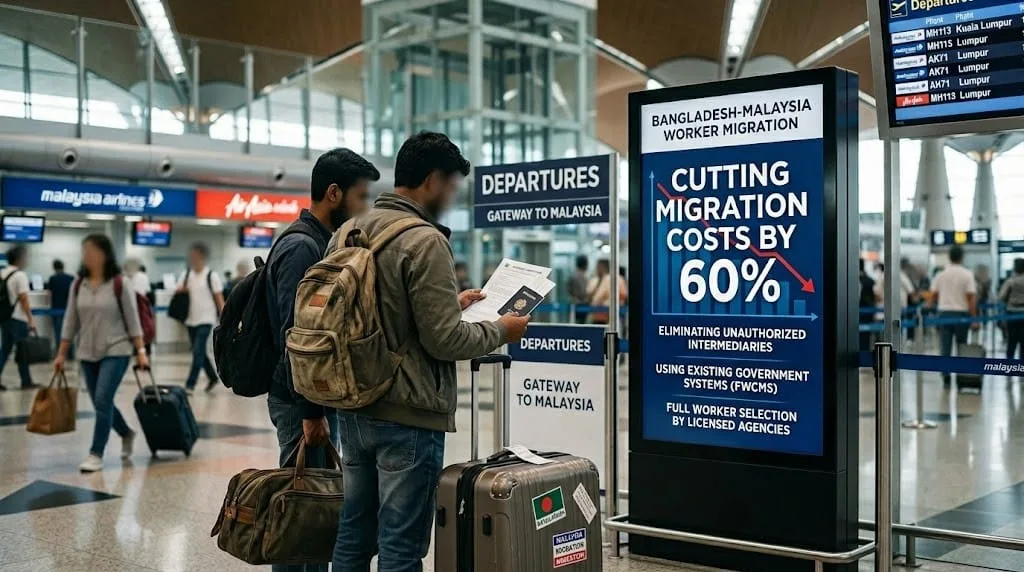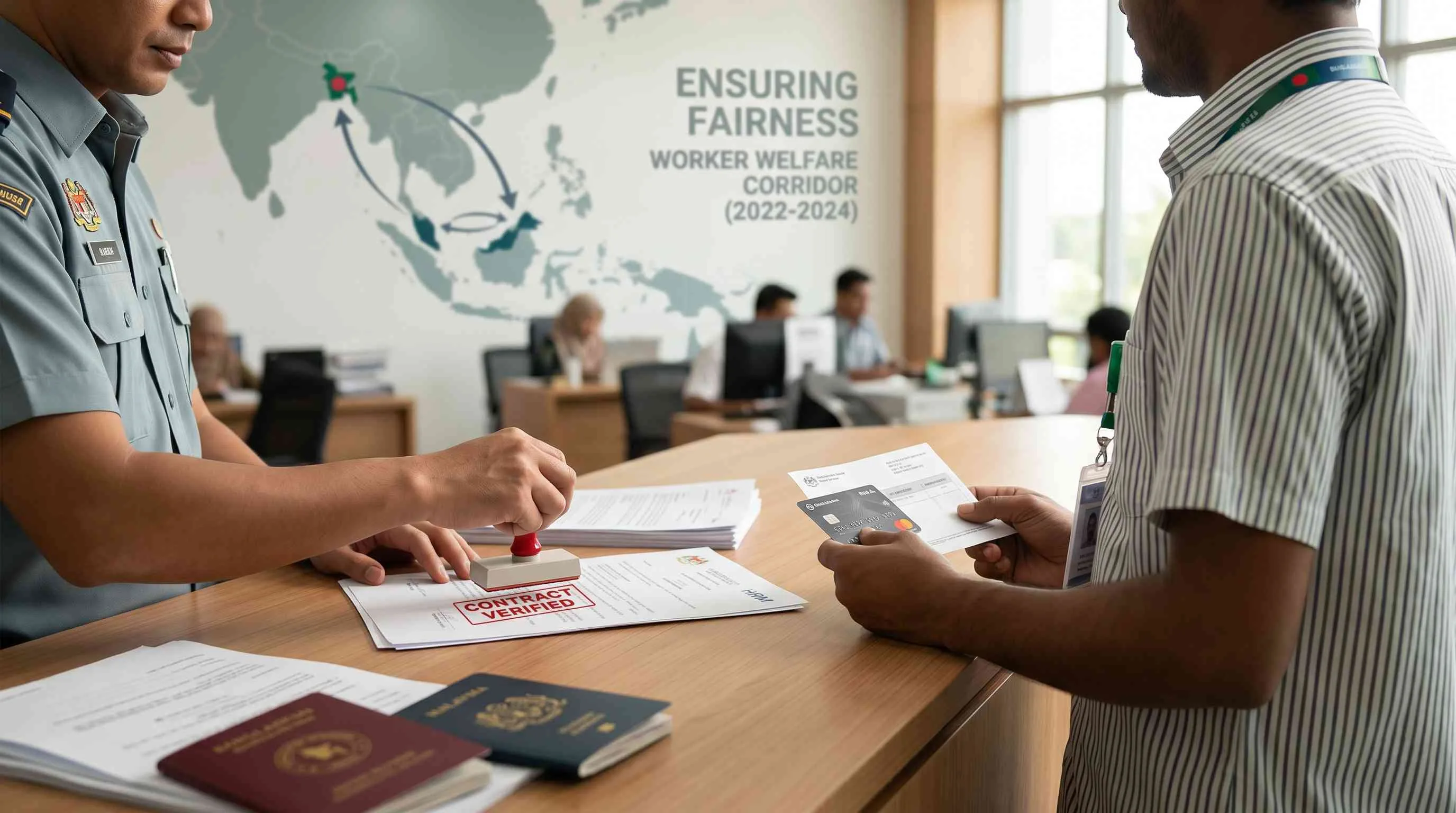

In just 22 months, nearly half a million Bangladeshi workers migrated to Malaysia through a fully online recruitment process — arriving at their designated employers without incident, receiving salaries through formal banking channels, and collectively generating an estimated 285 billion BDT annually, while lifting the welfare of an estimated 2.5 million people across Bangladesh.
An Online System That Delivered on Its Promise
The migration process governing this wave of Bangladeshi workers to Malaysia was conducted entirely through an online platform — a design choice that proved decisive in eliminating the manipulation and misdirection that had plagued earlier migration cycles. Because every step of recruitment, verification, and placement was digitally managed, workers arrived in Malaysia and joined their designated recruiting companies in accordance with their contracts. No cases of workers being misled upon arrival have been reported. Salaries and benefits are disbursed through formal banking channels, ensuring that income reaches workers reliably and is traceable. The relevant Malaysian government departments have remained actively committed to ensuring that all rights and welfare provisions outlined in each worker’s contract are fully upheld.
Earnings Through Formal Banking
Every worker receives a minimum salary of 1,500 Malaysian Ringgit per month, with overtime included, bringing average monthly take-home earnings to approximately 50,000 BDT. All payments are processed through formal banking channels, providing workers with financial security and verifiable income records.
Malaysia’s Rise in Remittance Rankings
Since the current cohort of workers joined the Malaysian workforce, Bangladesh’s remittance inflows from Malaysia have grown substantially. Malaysia advanced from 8th to 4th place among Bangladesh’s top remittance-sending countries — a direct reflection of the scale and regularity of wage transfers from this migration wave.
Zero Cost Migration: A Replicable Model
Under the management of Catharsis International, 358 workers were sent to Malaysia under an Employers Pay / Zero Cost Migration arrangement. The recruiting company covered all immigration expenses and paid recruiting charges to the agency through banking channels from Malaysia — demonstrating that ethical, cost-free migration is operationally achievable.
Wide Economic Reach Across Bangladesh
The nearly 500,000 workers now employed in Malaysia are not the only beneficiaries. Their remittances and support networks extend to an estimated 2.5 million people — family members and relatives across Bangladesh — whose livelihoods are sustained or improved by the earnings of workers deployed under this framework.
The Scale of the Economic Contribution
The aggregate economic impact of this migration wave is substantial. With approximately 475,000 workers each earning around 50,000 BDT per month, collective monthly earnings amount to an estimated 23,750 crore BDT. Projected over a full year, this figure reaches approximately 28,500 crore BDT — equivalent to nearly 285 billion BDT in annual income flowing into the Bangladeshi economy through this single labor corridor. This income circulates through household spending, savings, investment in small enterprises, and repayment of pre-migration costs, multiplying its impact across communities far beyond the workers themselves. The August 2024 remittance figure of 251.9 million US dollars from Malaysia alone underscores the corridor’s growing financial significance to Bangladesh’s broader remittance economy.
The Agency Network Behind the Numbers
The logistical scale of deploying nearly half a million workers in 22 months required a substantial institutional network. Approximately 1,100 recruiting agencies — comprising the 101 government-authorized agencies and their approved associate partners — are actively engaged in facilitating worker migration to Malaysia in the current phase, operating under powers of attorney granted by employers and within the framework sanctioned by the Malaysian government. This network, when functioning within its intended parameters, has demonstrated the capacity to move workers efficiently, transparently, and at regulated cost. The online-based centralized recruitment system has been integral to this outcome, providing a verified, fraud-resistant pipeline from worker selection through to arrival and employment in Malaysia.
The Ministry of Expatriates’ Welfare and Overseas Employment’s role in sustaining and expanding these gains is critical. Responsible oversight, continued commitment to the bilateral memorandum of understanding, and measures that preserve the integrity of the online recruitment process will determine whether Bangladesh can maintain and build on its improved position in the Malaysian labor market — and whether the economic benefits now reaching 2.5 million people can be extended further.
Source: Bangladesh–Malaysia Memorandum of Understanding | Remittance Growth Data | Zero Cost Migration: Catharsis International