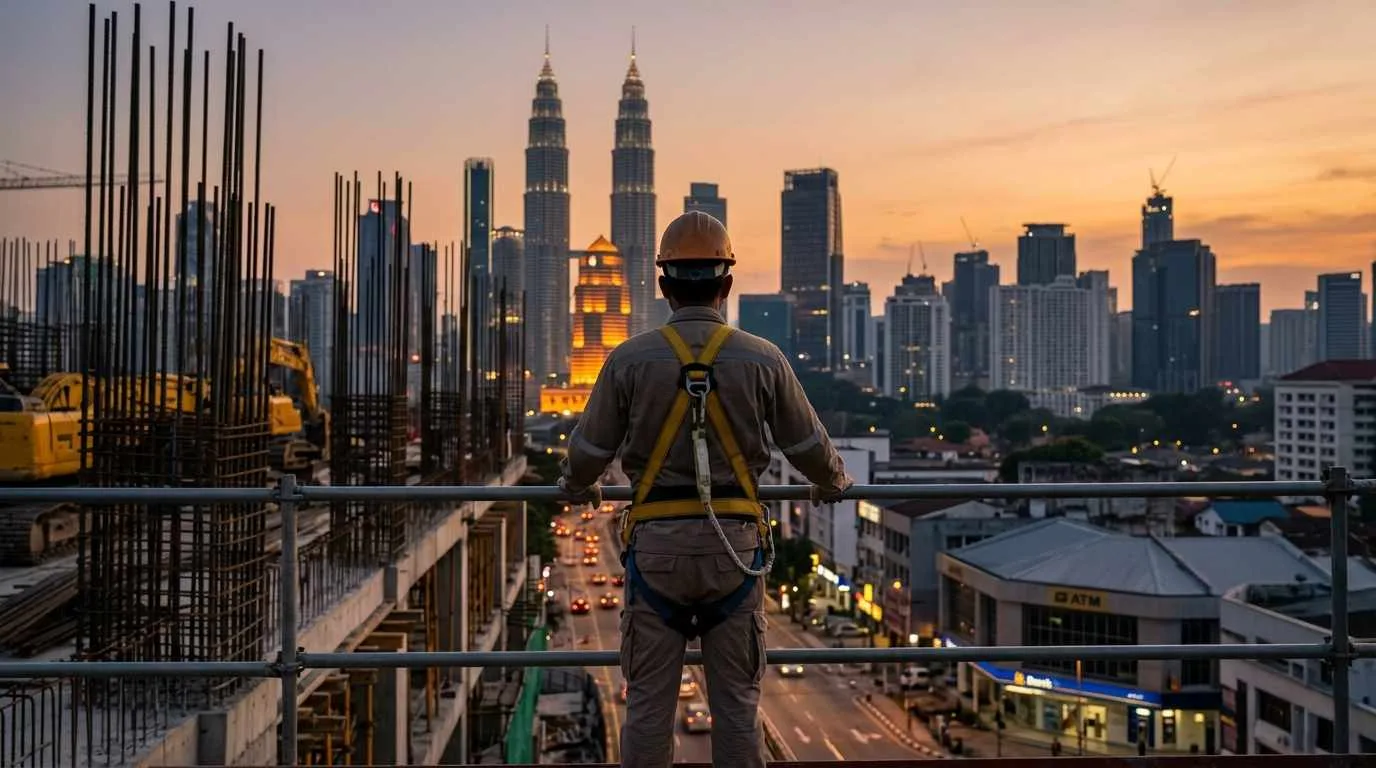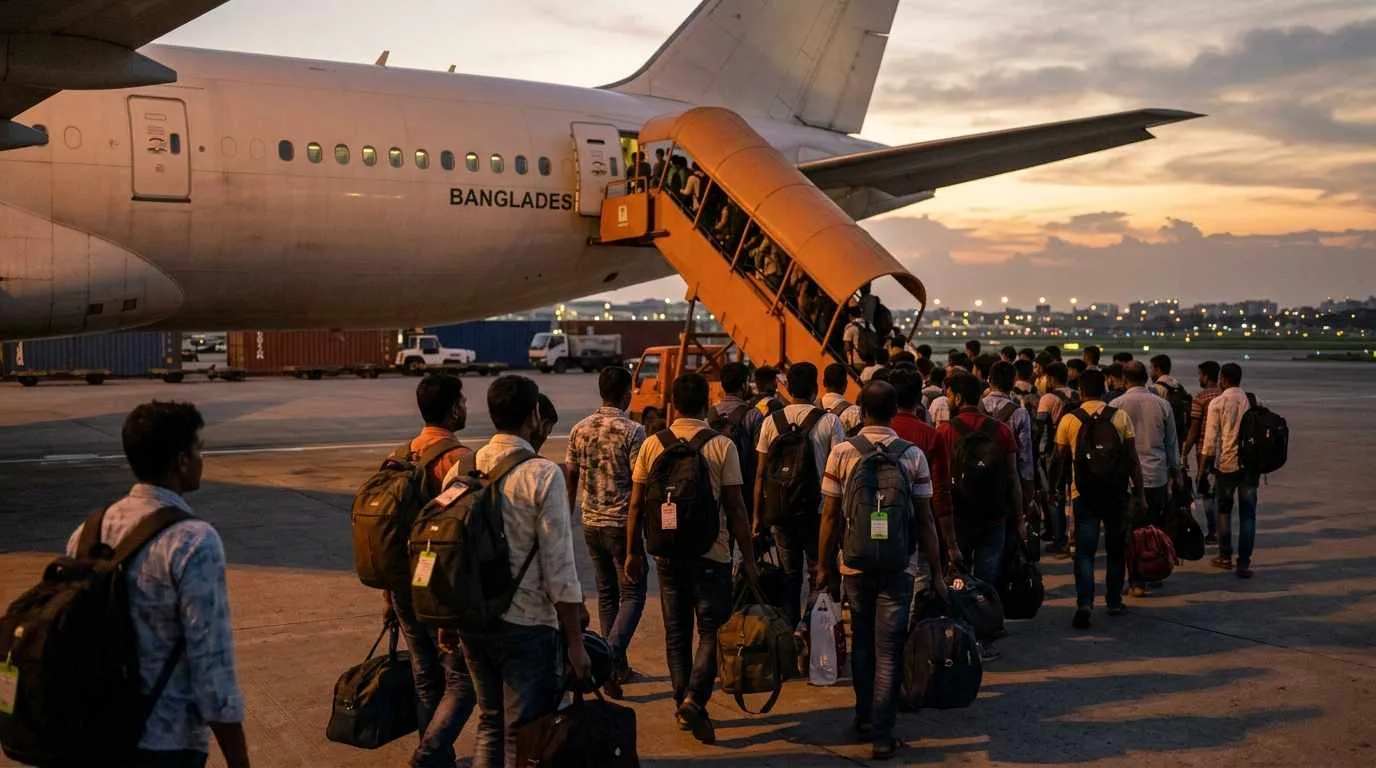

In May 2024, Bangladesh accomplished what no single labor-sending nation had managed in recent memory: it dispatched 45,031 workers to Malaysia in one calendar month — exceeding the combined total of 14 competing source countries, which together sent only 44,075 workers during the same period. The achievement is rendered even more striking by its timing: the Hajj season, when international airline capacity contracts sharply across the Muslim world and commercial ticket availability reaches its annual low point.
Beating the Hajj-Season Bottleneck
The Hajj pilgrimage creates an annual aviation chokepoint. Airlines redirect capacity toward Saudi Arabia, compressing seat availability on international routes out of South and Southeast Asia. For labor-sending countries dependent on commercial flights to move workers abroad, this typically forces slowdowns and missed deployment windows. Bangladesh responded differently — BAIRA, the Bangladesh Association of International Recruiting Agencies, coordinated emergency chartered flights, securing dedicated aircraft capacity outside the constrained commercial system and keeping the worker pipeline to Malaysia flowing at record volume.
Four Pillars Behind the Record
Emergency Charter Coordination
BAIRA’s activation of chartered flights bypassed the Hajj-season ticket shortage, ensuring uninterrupted worker departures at a time when rival nations were scaling back.
Mature Recruitment Infrastructure
Bangladesh’s network of licensed recruitment agencies, bilateral labor agreements, and established processing pipelines allowed the country to surge output rapidly when a high-demand window opened.
Speed as a Market Advantage
Malaysian employers prioritize source countries that can deliver workers on compressed timelines. Bangladesh’s May 2024 performance demonstrated precisely that capability at an unprecedented scale.
Institutional Agility
Coordinating government bodies, private agencies, and aviation partners simultaneously under Hajj-season constraints reflects a level of institutional agility few labor-sending nations can replicate.
The Competitive Context
Malaysia’s labor market draws workers from across South and Southeast Asia — India, Nepal, Indonesia, the Philippines, Vietnam, and others all compete for the same employer contracts. That Bangladesh alone outpaced 14 of these nations combined in a single month reframes the country’s position in the global labor-export hierarchy. This was not a marginal lead; it was a structural demonstration of superior logistics at scale.
Bangladesh–Malaysia Labor Corridor: Key Milestones
Early 2000s
Bangladesh formalizes bilateral labor agreements with Malaysia, establishing steady migrant worker flows into manufacturing, construction, and plantation sectors.
2018
Malaysia suspends recruitment from Bangladesh, disrupting the corridor and forcing agencies to halt processing pipelines for an extended period.
2022–2023
The Malaysia labor corridor reopens following bilateral negotiations, with Bangladeshi recruitment agencies resuming and scaling up operations.
May 2024
Bangladesh sets its record: 45,031 workers dispatched in a single month via BAIRA-coordinated emergency charters, surpassing 14 competing nations combined during peak Hajj-season constraints.
May 2024 Dispatch Comparison
| Sending Nation / Group | Workers Dispatched (May 2024) | Ranking |
|---|---|---|
| Bangladesh | 45,031 | #1 — Individual nation record |
| 14 Competing Nations (Combined) | 44,075 | 956 fewer than Bangladesh alone |
What the Record Reveals
A single month’s output is a data point, not a destiny — but it is a revealing one. The May 2024 performance shows that Bangladesh’s recruitment infrastructure, when properly coordinated, can operate at a level that outpaces entire coalitions of competing nations. For policymakers and recruitment agencies, the immediate priority becomes consistency: replicating this operational model across other high-demand windows and extending the same strategic coordination to new destination markets beyond Malaysia.
Behind the record numbers are 45,031 individuals — workers whose departures represent livelihoods secured, remittances flowing home, and families supported. The logistical milestone and the human reality it contains are inseparable. Bangladesh has demonstrated it possesses world-class labor-export capability. The task now is to build on it.