285 Billion BDT a Year: How Bangladesh’s Malaysia Migration Corridor Became a Remittance Powerhouse

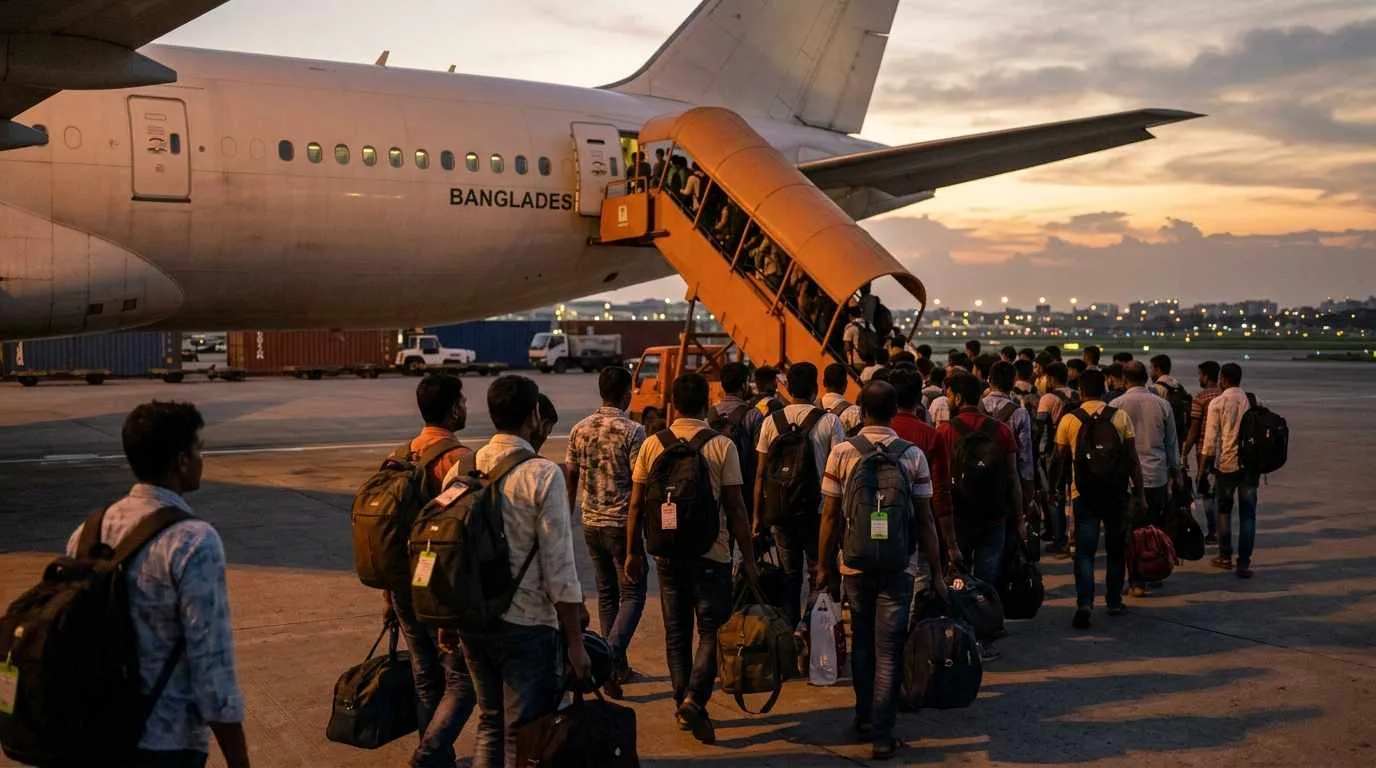
In just 22 months, the structured deployment of nearly half a million Bangladeshi workers to Malaysia has quietly engineered one of the most significant shifts in Bangladesh’s remittance geography in recent memory — propelling Malaysia from 8th to 4th place among Bangladesh’s top remittance-sending countries and channeling an estimated 285 billion BDT annually into the national economy, with benefits reaching an estimated 2.5 million people across the country.
From 8th to 4th: How a Single Corridor Moved the Needle
When Bangladesh and Malaysia reopened their bilateral labor migration framework in August 2022, the economic consequences were not immediately visible. They became so within months. As hundreds of thousands of workers joined the Malaysian workforce and began remitting earnings home through formal banking channels, Malaysia’s position in Bangladesh’s remittance rankings shifted decisively — from 8th place to 4th. The August 2024 figure of 251.9 million US dollars in remittances from Malaysia alone captures the momentum of that shift. It reflects not a one-time surge but the accumulated, month-on-month financial output of a workforce that is now one of the largest single-source labor cohorts Bangladesh has ever deployed to a single country within a defined time period.
Breaking Down the 285 Billion BDT Figure
The arithmetic behind Bangladesh’s remittance windfall from Malaysia is straightforward — and the scale it reveals is striking. Each of the approximately 475,000 deployed workers earns a minimum salary of 1,500 Malaysian Ringgit per month, with overtime bringing average monthly take-home earnings to approximately 50,000 BDT. Multiplied across the workforce, this produces an estimated monthly collective income of 23,750 crore BDT. Projected over a full year, that figure reaches approximately 28,500 crore BDT — equivalent to nearly 285 billion BDT flowing into the Bangladeshi economy through this single labor corridor. This income circulates through household spending, savings, investment in small enterprises, and repayment of pre-migration costs, multiplying its economic impact well beyond the workers themselves.
Formal Banking: The Reliability Factor
Every worker in the current framework receives their salary and benefits through formal banking channels. This ensures that income reaches workers reliably, is fully traceable, and generates verifiable financial records — a structural shift from earlier migration cycles where informal payment methods left workers financially exposed and remittance flows difficult to measure.
Malaysia’s Remittance Ranking Leap
Since the current cohort of workers began entering the Malaysian workforce in August 2022, Bangladesh’s remittance inflows from Malaysia have grown substantially enough to move the country four positions up the rankings — from 8th to 4th among Bangladesh’s top remittance-sending countries. The August 2024 monthly figure of 251.9 million US dollars illustrates the corridor’s sustained and growing financial output.
The 2.5 Million People Behind the Numbers
The economic reach of this migration wave extends far beyond the nearly 500,000 workers employed in Malaysia. Their remittances and financial support networks sustain or improve the livelihoods of an estimated 2.5 million people — family members and relatives across Bangladesh — transforming what began as a bilateral labor policy into a broad-based social and economic dividend.
Zero Cost Migration: A Proven Model
Under an Employers Pay arrangement managed by Catharsis International, 358 workers were deployed to Malaysia entirely free of charge, with all immigration expenses and recruiting charges borne by the recruiting company and paid through formal banking channels from Malaysia. The model demonstrates that cost-free, ethical migration is not only possible but operationally achievable within the existing framework.
The Online System That Made It Possible
The scale and regularity of remittance flows from Malaysia did not happen by accident. They were made possible by a recruitment process conducted entirely through an online platform — a design that proved decisive in eliminating the manipulation and misdirection that had characterized earlier migration cycles. Because every step of recruitment, verification, and placement was digitally managed, workers arrived in Malaysia and joined their designated employers in accordance with their contracts. No cases of workers being misled upon arrival have been reported. The relevant Malaysian government departments have remained actively committed to ensuring that all rights and welfare provisions outlined in each worker’s contract are fully upheld — a standard of enforcement that has directly supported the consistency and volume of remittance flows now reaching Bangladeshi households.
The Institutional Network Behind Half a Million Deployments
Deploying nearly 500,000 workers across a 22-month window required an institutional network operating at significant scale. Approximately 1,100 recruiting agencies — comprising the 101 government-authorized agencies and their approved associate partners — are actively facilitating worker migration to Malaysia in the current phase, operating under powers of attorney granted by employers and within the framework sanctioned by the Malaysian government. The online-based centralized recruitment system has been integral to this outcome, providing a verified, fraud-resistant pipeline from worker selection through to arrival and employment. The Ministry of Expatriates’ Welfare and Overseas Employment’s continued oversight and commitment to the bilateral MoU will determine whether the economic gains now reaching 2.5 million people can be sustained and extended in the years ahead.