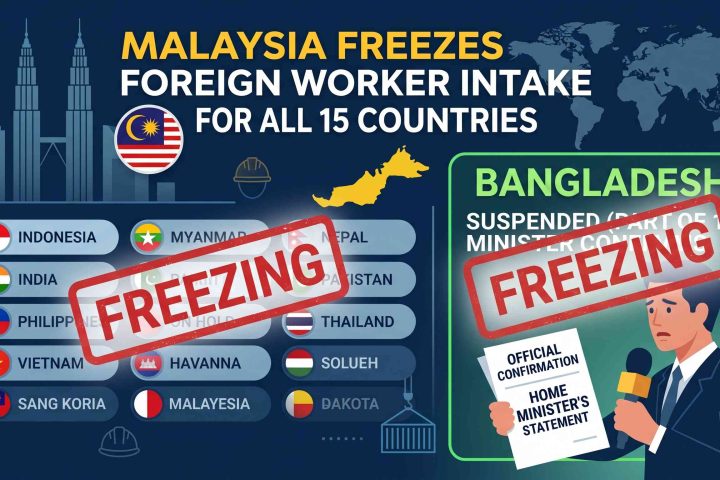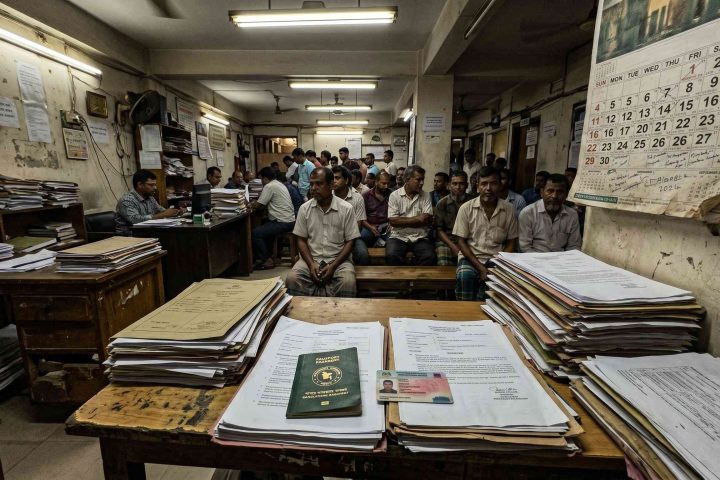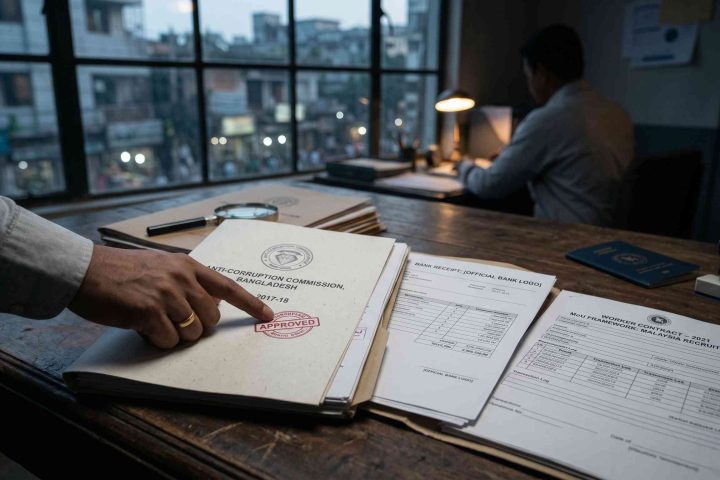
A decades-long history of fraud, illegal migration, and systemic irregularities forced Bangladesh and Malaysia to construct a tightly controlled, agency-limited recruitment framework — yet the very restrictions designed to protect workers became the fault lines that unlisted agencies exploited, driving migration costs to unsustainable heights.
From 23 Workers to a Broken System: The Long Road to Controlled Migration
Bangladesh’s labor migration relationship with Malaysia stretches back to 1978, when just 23 workers made the journey under informal arrangements. Yet despite that early beginning, the two governments did not formalize their relationship through an official bilateral agreement until 1992. That agreement proved short-lived — the Malaysian market closed shortly after, reopened in 1996, then entered a prolonged cycle of closure and re-opening that continued through 2008. From 2009 onwards, the market effectively shut its doors to Bangladeshi general workers for several years. The causes were not accidental. They were the accumulated result of systemic failures that both governments had tolerated for too long.
The Irregularities That Closed a Market
The list of irregularities that eroded Malaysian confidence in Bangladeshi labor migration reads as a comprehensive catalogue of institutional failure: passport forgery, falsified or altered personal data, the entry of individuals with criminal records, procedural breakdowns inherent to manual migration processing, workers abandoning their contracted employers, and the use of tourist visas to gain unauthorized employment — all facilitated by unlicensed agents and brokers operating outside any regulatory framework. Faced with this pattern, Malaysian government agencies and private employers alike grew reluctant to continue recruitment. Between 2009 and 2012, migration of general workers from Bangladesh to Malaysia came to a near-complete halt, with only a limited number of professionals continuing to make the journey through formal channels.
Illegal Sea Routes & Border Deaths
As formal channels closed, many Bangladeshi workers attempted to reach Malaysia via dangerous sea routes and through the Thai border. Mass graves of Bangladeshi migrants were discovered in Thai border areas in 2015 — a tragedy that damaged Bangladesh’s international reputation and left countless families in desperate circumstances.
The G2G Experiment (2012)
A Government-to-Government agreement in 2012 reopened the market under controlled conditions. Despite Malaysia approving a quota of 30,000 workers, only approximately 9,000 migrated — evidence that structural frameworks alone cannot create migration flows without genuine employer demand.
G2G Plus & The FWCMS Platform (2016)
The February 2016 MoU introduced the G2G Plus model, permitting up to ten private agencies alongside government channels. This was paired with Malaysia’s FWCMS — a fully automated, cross-ministry digital platform designed to eliminate document fraud and ensure end-to-end transparency in worker recruitment.
The 101-Agency Framework (2021–2022)
A new MoU signed in December 2021 expanded the approved agency list; following a joint working group meeting in June 2022, recruitment commenced through 25 agencies, later expanded to 101 including BOESL. The system enabled online verification across the full recruitment pipeline — from demand letters to BMET exit clearance.
Timeline: Five Decades of Migration, Policy, and Crisis
1978
Bangladesh begins labor migration to Malaysia with the deployment of 23 workers, operating without a formal bilateral framework.
1992
The first official bilateral labor agreement between Bangladesh and Malaysia is signed, providing a formal foundation for worker migration.
1996–2008
The Malaysian labor market for Bangladeshi workers undergoes repeated cycles of closure and re-opening, driven by persistent irregularities and fraud in the migration process.
2009–2012
The Malaysian market effectively closes to Bangladeshi general workers. Widespread passport forgery, illegal entry, and broker-driven abuses have eroded employer and government confidence.
2012
A G2G agreement between the two governments reopens the market. Despite a 30,000-worker quota, only ~9,000 workers migrate — employer interest in the G2G mechanism proves insufficient.
2015
Mass graves of Bangladeshi migrants discovered in Thai border areas, exposing the deadly consequences of informal and illegal migration channels. Bangladesh’s international standing suffers significantly.
February 18, 2016
Bangladesh and Malaysia sign a new MoU establishing the G2G Plus model. Up to ten private recruiting agencies are authorized alongside government channels, supported by Malaysia’s FWCMS digital recruitment platform.
December 5, 2019
Malaysia’s Minister of Human Resources informs Parliament that investigations found no evidence to support complaints against the FWCMS system, and reaffirms interest in recruiting Bangladeshi workers.
December 19, 2021
A new MoU is signed to reopen the Malaysian labor market. Bangladesh agrees to allow Malaysia to select licensed agencies through an automated online system.
June 2022
Recruitment commences through 25 approved Bangladeshi agencies following a joint working group meeting. The list is subsequently expanded to 101 agencies including BOESL.
August 2022 – May 2024
476,672 Bangladeshi workers are deployed to Malaysia under the expanded framework — the largest structured wave of migration between the two countries.
Why Restriction Was a Feature, Not a Bug
Malaysia’s rationale for limiting the number of authorized recruiting agencies was deliberate and informed by precedent. The country frequently benchmarks its economic and immigration policies against Singapore, which manages Bangladeshi worker recruitment through just six training centers and fourteen agencies — a model credited with maintaining disciplined, transparent migration flows. Malaysian officials at the time of the 2016 G2G Plus signing articulated a clear belief: fewer agencies meant cleaner accountability. When irregularities occurred within a limited agency framework, responsibility could be traced, assigned, and enforced. The FWCMS platform reinforced this logic by digitizing and integrating every step of the process across multiple government ministries in both countries, closing the procedural gaps that manual processing had long left open.
The Associate Agency Problem: Reform Undermined From Within
The limited-agency model faced immediate resistance from the far larger population of unlisted recruiting agencies excluded from the approved framework. These agencies organized protests and public demonstrations, disrupting the migration process and generating political pressure on the ministry. In response, the ministry permitted the 101 approved agencies to bring unlisted agencies in as associate partners — a compromise intended to reduce friction. Instead, it reopened the very vulnerability the controlled system had been designed to close. Associate agencies, working alongside local employer agents, gained practical influence over worker selection and the supply chain. This leverage was monetized: migration costs climbed sharply, with some workers ultimately paying 500,000 BDT or more — costs the formal system had been designed to prevent.
The Path Forward: Recommendations From the Data
The evidence points clearly toward a structural course correction. To fully utilize Malaysia’s labor market opportunities for Bangladeshi workers, the data recommends aligning recruitment practices with Malaysia’s own approved policy framework rather than working against it. More specifically, eliminating intermediary and associate agencies from the supply chain — and restoring full operational authority to the two governments’ quota-approved agencies — is identified as the most effective path to reducing migration costs to optimal levels. Direct management of the recruitment pipeline by approved agencies would not only reduce costs but also restore the transparency and safety that the FWCMS-based system was originally built to guarantee.