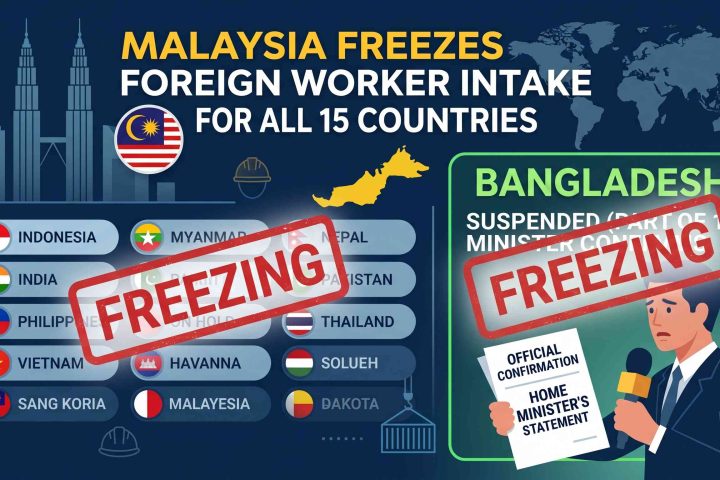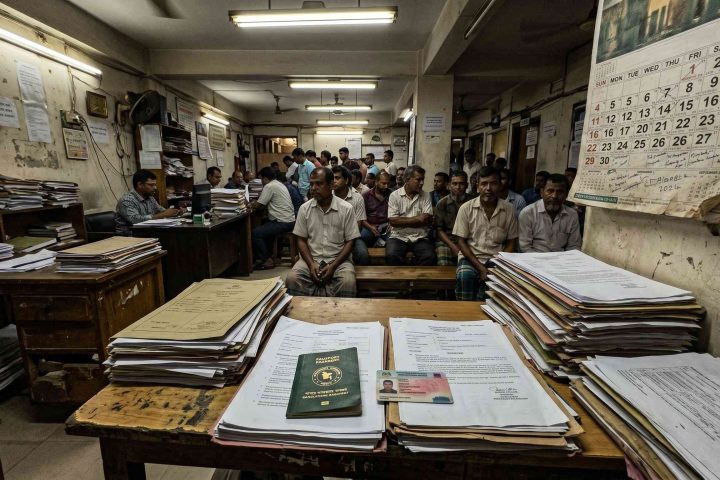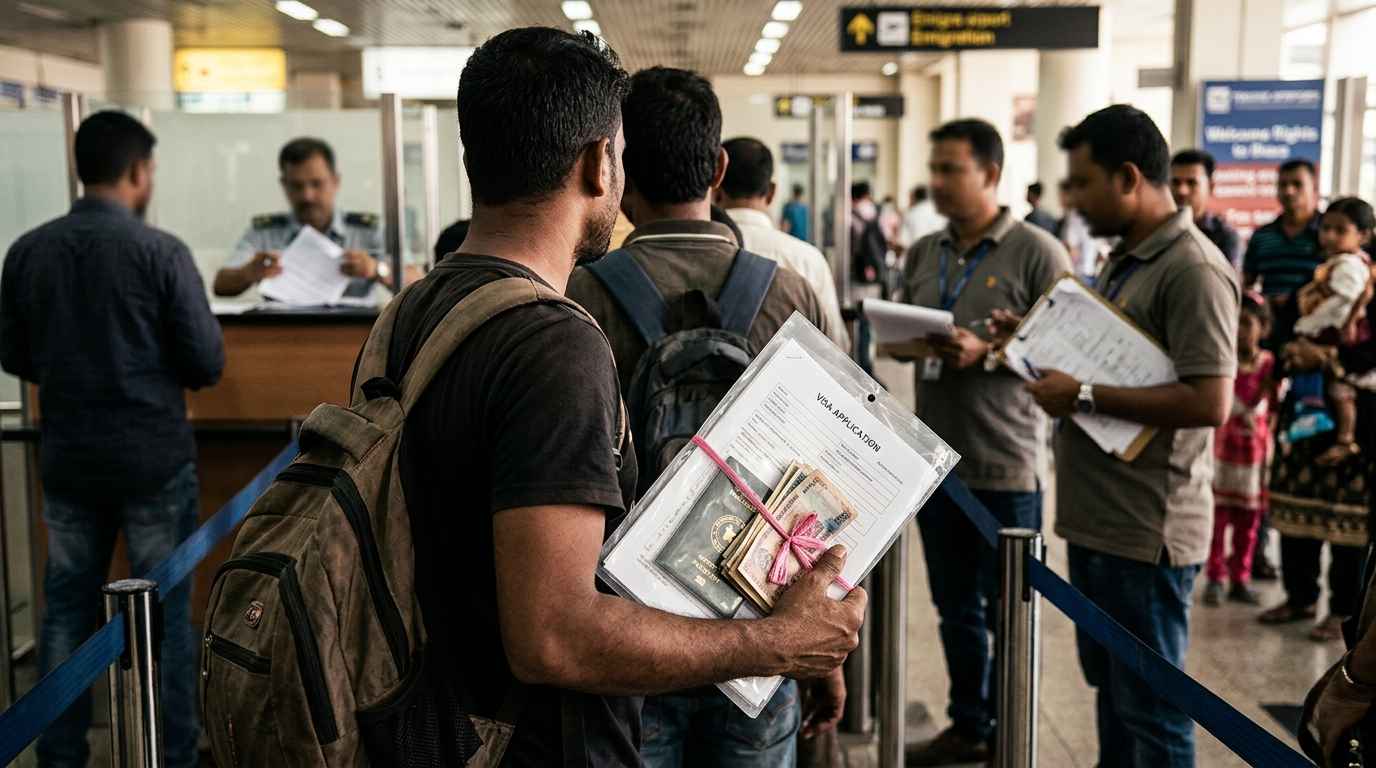
A policy concession designed to calm domestic political unrest is now quietly doubling the migration costs for Bangladeshi workers headed to Malaysia — and threatening Bangladesh’s standing as a trusted labor-sending nation at a critical diplomatic moment. When excluded recruiting agencies staged protests against Malaysia’s agency-limited labor framework, Bangladesh’s Ministry of Expatriates’ Welfare took a path of least resistance: it allowed listed agencies to bring in non-listed firms as “associate partners.” The move, framed as a pragmatic compromise, effectively recreated the very intermediary layer the bilateral system was originally engineered to eliminate.
How the System Was Undermined
The Original Intent
Malaysia’s agency-limited framework was designed to streamline recruitment and protect workers by cutting out unnecessary middlemen who inflate migration fees.
The Political Pressure
Non-listed recruiting agencies, facing exclusion from a lucrative labor corridor, organized protests that created domestic political pressure on Bangladesh’s ministry.
The Compromise
The ministry’s solution — allowing “associate partner” arrangements — gave non-listed firms a backdoor re-entry into the migration supply chain, bypassing the framework’s core safeguard.
The Cost to Workers
Each additional layer of agency involvement adds fees that are ultimately passed down to workers, effectively doubling the out-of-pocket costs migrants must bear to secure employment abroad.
A Timeline of Concession
Phase 1 — Framework Launch
Malaysia introduces an agency-limited labor recruitment system intended to reduce costs and protect Bangladeshi migrant workers by controlling who can operate in the corridor.
Phase 2 — Industry Pushback
Excluded recruiting agencies, shut out of the Malaysia labor market, organize protests and lobby Bangladesh’s Ministry of Expatriates’ Welfare for inclusion.
Phase 3 — Policy Concession
Under domestic political pressure, the ministry permits listed agencies to register non-listed firms as “associate partners,” quietly reopening the intermediary layer.
Phase 4 — Cost Inflation
Migration costs for workers begin to reflect the added agency layer. Sector experts warn costs have effectively doubled — precisely the outcome the original framework sought to prevent.
What Experts Are Saying
Sector experts are unambiguous in their assessment: the associate agency arrangement is not a neutral administrative accommodation — it is a structural cost driver. Removing these intermediary actors, they argue, could reduce migration costs for workers by at least 50%. The financial burden currently falls on the workers themselves, who take on debt and deplete savings to cover fees inflated by a chain of agencies each extracting a margin.
Bangladesh’s Credibility at Stake
The timing could not be more consequential. Malaysia is actively deliberating whether to reopen its labor market to Bangladesh. The associate agency arrangement — and its visible cost consequences — sends a troubling signal: that Bangladeshi policy commitments can be unwound under domestic pressure, and that workers’ financial protection is negotiable. For Bangladesh to position itself as a reliable, reform-minded labor-sending country, the gap between its stated framework and its implemented practice must be addressed.
| System Stage | Agency Layers | Estimated Worker Cost Impact |
|---|---|---|
| Original Framework (Intended) | Listed agencies only | Baseline / Reduced |
| Post-Concession (Current) | Listed + Associate (non-listed) | Up to 2× baseline |
| Reform Scenario (Expert-Recommended) | Listed agencies only (enforced) | 50%+ reduction possible |