Inside the Cost Gap: How Bangladesh’s Malaysia Migration Boom Left Workers Paying Far More Than The Expected Fee

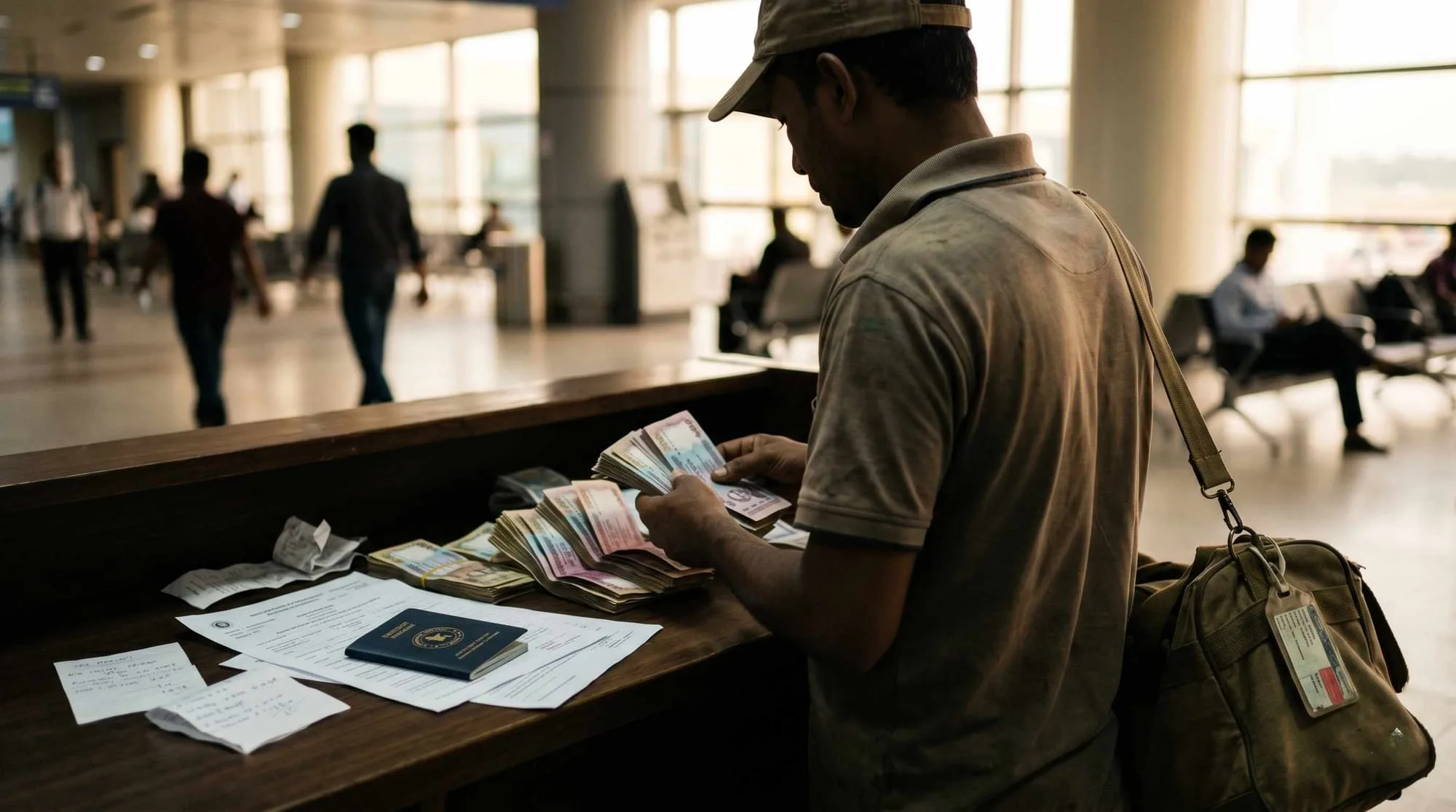
Nearly 500,000 Bangladeshi workers who legally migrated to Malaysia between 2022 and 2024 paid 5–6 lakh BDT each to secure employment — three to four times the regulated agency fee — as a gap between a government-to-government recruitment framework and the financial reality on the ground left hundreds of thousands in debt, with roughly 75% of affected workers yet to receive any refund despite ministerial intervention.
A Framework Built for Transparency
Following Malaysia’s extended closure of its labor market to Bangladesh, both governments signed a Memorandum of Understanding on December 19, 2021, establishing a regulated recruitment framework. A Joint Working Group meeting on June 2, 2022 confirmed that Malaysia would select Bangladeshi recruiting agencies through an online-based automated system — designed to ensure fairness in both agency selection and quota distribution.
Malaysia initially listed 25 agencies from 1,520 valid license holders submitted by Bangladesh’s Ministry of Expatriates’ Welfare and Overseas Employment, later expanding to 101 agencies including the state-run BOESL. Quotas were distributed through an Auto Allocation System. Neither the MoU nor the Joint Working Group minutes contained any provision permitting listed agencies to appoint local agents or sub-agencies — rendering any such involvement outside the legal framework.
The Gap Between Framework and Reality
Despite the clearly defined legal structure, more than 1,100 agencies ultimately became involved in the Malaysia migration corridor — far exceeding the authorized 101. Of these, 735 have been identified as unlisted recruiting agencies operating without legal authorization. These agencies liaised directly with Malaysian employers, purchased visas through channels outside the regulatory framework, and deployed local agents to work alongside the authorized quota-holding agencies.
The mechanism operated systematically: unlisted agencies, through employer-side local agents, worked with authorized quota-holding agencies to process visas, e-visas, and BMET clearances for workers outside the legitimate Auto Allocation process. Employers, in many instances, declined to accept workers outside the unlisted agencies’ selections. Large sums exchanged between employers and local agents as part of these visa transactions pushed the total migration cost per worker to 5–6 lakh BDT — a burden borne entirely by the workers themselves.
Breaking Down the Cost
Authorized Agency Fees
The 101 authorized agencies charged workers approximately 1–1.5 lakh BDT — their regulated service cost for completing all legally mandated steps including visa processing, BMET clearance, and worker dispatch.
Unregulated Markup
The remaining 3.5–4.5 lakh BDT of the total 5–6 lakh BDT per worker moved through unregulated channels tied to illegal visa trading arrangements — money exchanged entirely outside any formal regulatory framework.
Full Legal Burden on Authorized Agencies
Despite the pressures they faced, all 101 authorized agencies retained full legal responsibility — covering Bangladesh High Commission verifications, medical exams, worker registration, dispatch, and post-arrival wage and benefit oversight in Malaysia.
Refund Compliance Gap
Following ministerial intervention, listed agencies were directed to refund amounts received from unlisted agencies, and unlisted agencies were told to refund workers directly. To date, only approximately 25% of affected workers have received any refund.
Timeline: Bangladesh–Malaysia Labor Corridor
December 19, 2021
Bangladesh and Malaysia sign the MoU establishing a structured, transparent recruitment framework through a limited number of authorized agencies.
June 2, 2022
Joint Working Group meeting confirms agency selection via an online automated system. Selection draws from a pool of 1,520 valid license holders.
August 8, 2022
Malaysia’s labor market officially reopens for Bangladeshi workers. Initial listing of 25 agencies later expands to 101, including BOESL.
2022–2024
Nearly 500,000 workers migrate legally through authorized agencies. Simultaneously, 735+ unlisted agencies operate outside the legal framework, with per-worker costs reaching 5–6 lakh BDT.
May 31, 2024
Formal recruitment phase concludes. Malaysia rises from 8th to 4th place in remittance contributions to Bangladesh. Refund compliance remains at approximately 25%.
What the Numbers Mean for Workers
For the workers at the center of this story, the financial exposure was significant. A migration cost of 5–6 lakh BDT — often financed through loans against land or family savings — represents years of anticipated earnings. The refund shortfall means that for approximately 75% of affected workers, the excess costs paid above the regulated agency fee remain unrecovered, even after the corridor formally closed in May 2024.
Malaysia’s rise from 8th to 4th place in remittance contributions to Bangladesh during this period reflects the scale of the workforce that moved through the corridor. The bilateral framework, built around the 2021 MoU and the Auto Allocation System, succeeded in moving nearly half a million workers into formal, wage-paying employment — a significant outcome that now exists alongside an unresolved question of financial redress for those who paid far above the regulated cost to get there.