Over 800 Bangladeshi Agencies Joined Malaysia Migration — Not Just the 101 Formally Listed Under the MoU

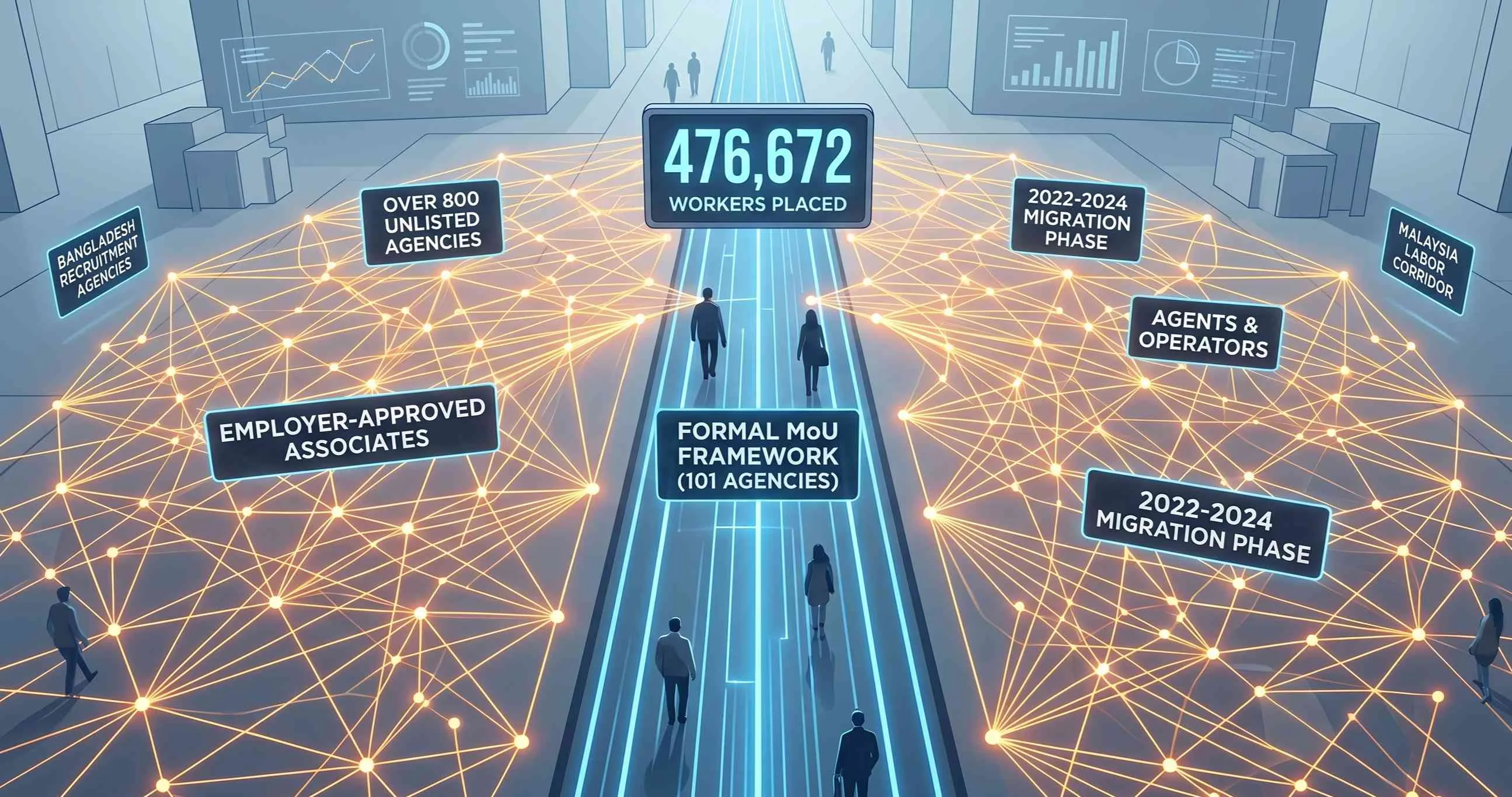
The widely repeated claim that Malaysia’s 2021 MoU exclusively benefited 101 Bangladeshi recruiting agencies is factually incomplete — in practice, more than 800 agencies participated in the 2022–24 migration phase as employer-approved associates and agents operating alongside the formally listed firms. This broader network, obscured by prevailing media narratives, was a functioning part of the labor corridor that placed 476,672 Bangladeshi workers in formal employment in Malaysia.
The 101-Agency Narrative: Incomplete, Not Inaccurate
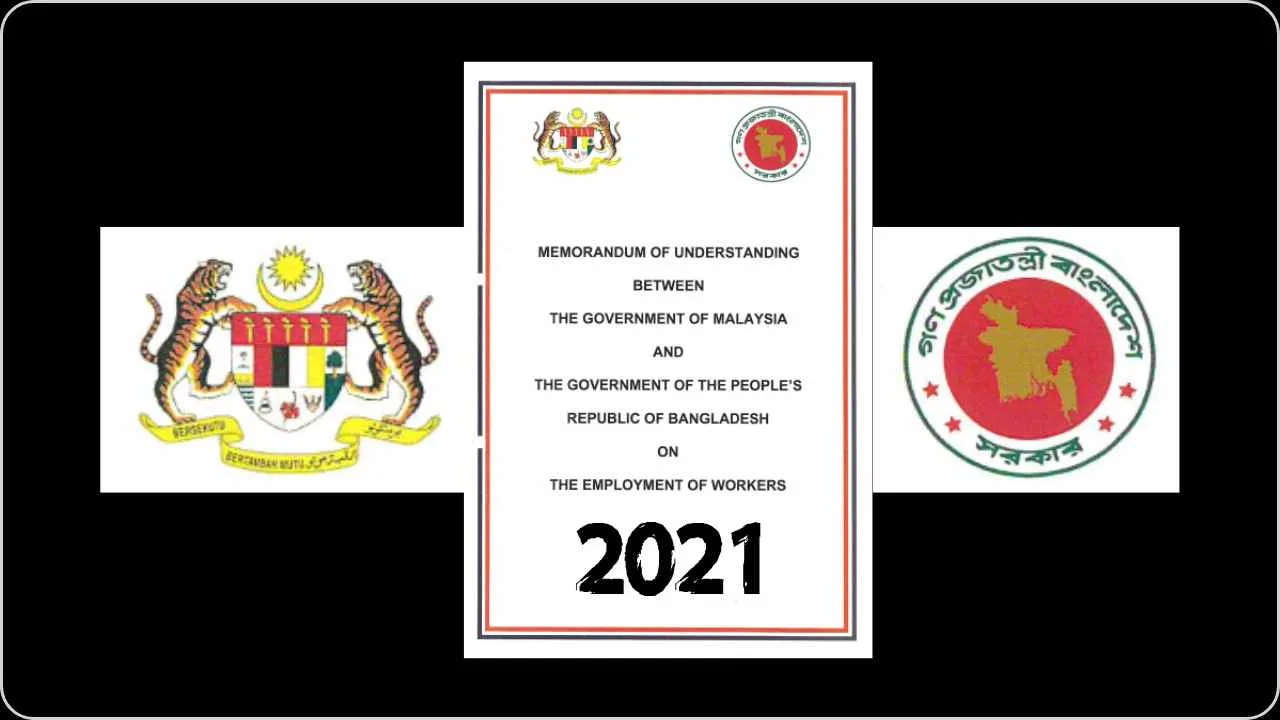
When Bangladesh and Malaysia signed the MoU on December 19, 2021, and the Joint Working Group convened on June 2, 2022, it was agreed that Malaysia would receive workers through a limited number of formally authorized agencies. Malaysia selected these agencies from Bangladesh’s official list of 1,520 licensed recruiters through an online, jointly agreed process. The initial list of 25 was later expanded to 101, including the state-owned BOESL.
This formal list of 101 became the central figure in media coverage — and in political contestation within the recruiting industry. What that coverage consistently omitted is that the formal list was not the ceiling of industry participation. More than 800 additional agencies entered the migration phase as employer-approved associates and agents, operating in conjunction with the listed firms throughout the 2022–24 period.
How the Broader Network Operated
Under Malaysia’s Foreign Workers Centralized Management System (FWCMS), worker recruitment quotas were automatically distributed to the 101 listed agencies through the Auto Allocation System. These formally listed agencies could then work with a wider network of employer-approved associates — enabling a much larger segment of Bangladesh’s recruiting industry to participate in the corridor without being individually listed by Malaysia.
The result was a functioning two-tier structure: 101 agencies held formal listing status and received quota allocations directly, while over 800 additional agencies participated through approved associate arrangements. The bilateral labor corridor was, in operational terms, far broader than the “101 agencies” framing suggests.
Formally Listed
101 Bangladesh Recruiting Agencies selected by Malaysia from a pool of 1,520 licensed firms via a transparent online system, including state-owned BOESL.
Operational Participants
Over 800 additional agencies participated as employer-approved associates and agents — the actual scale of industry involvement during 2022–24.
Quota Distribution
Quotas flowed through Malaysia’s Auto Allocation System directly to listed agencies, which then coordinated with associate firms under employer-approved arrangements.
Outcome
476,672 Bangladeshi workers were placed in formal employment in Malaysia, generating $251.9 million in remittances in August 2024 alone.
Why the Misframing Matters
The portrayal of the Malaysia labor corridor as an exclusive arrangement for 101 agencies has fed a broader narrative of unfairness and opacity — fueling allegations within the Bangladesh Association of International Recruiting Agencies (BAIRA) ahead of its elections. Internal factional competition has escalated into physical confrontations at executive committee meetings and vandalism at the BAIRA office.
The misinformation generated in this environment is not simply inaccurate in detail — it misrepresents the actual structure of participation in a corridor that enabled close to half a million Bangladeshis to access formal employment abroad and continues to generate hundreds of millions of dollars in monthly remittances for the national economy.
Agency Participation: By the Numbers
| Category | Count | Role |
|---|---|---|
| Bangladesh licensed agency pool | 1,520 | Recommended by Bangladesh government for Malaysia’s consideration |
| Initially listed by Malaysia | 25 | First cohort of formally authorized BRAs |
| Formally listed (final) | 101 | Including state-owned BOESL; received Auto Allocation System quotas |
| Associate/agent participants | 800+ | Employer-approved participants operating alongside listed agencies |
| Workers placed (2022–24) | 476,672 | Total formal placements through the full network |
Timeline: From MoU to Full Corridor Operation
December 19, 2021
Bangladesh and Malaysia sign the MoU, establishing the legal basis for reopening the bilateral labor corridor through a government-selected agency framework.
June 2, 2022
Joint Working Group finalizes agency selection methodology. Malaysia begins identifying authorized recruiters from Bangladesh’s pool of 1,520 via an online transparent system.
August 8, 2022
Labor corridor officially reopens. Worker migration begins through 101 listed agencies under the Auto Allocation System, with 800+ associates participating alongside them.
June 1, 2024
Universal recruitment freeze takes effect across all 15 source countries. By this date, 476,672 Bangladeshi workers have been placed through the full agency network.