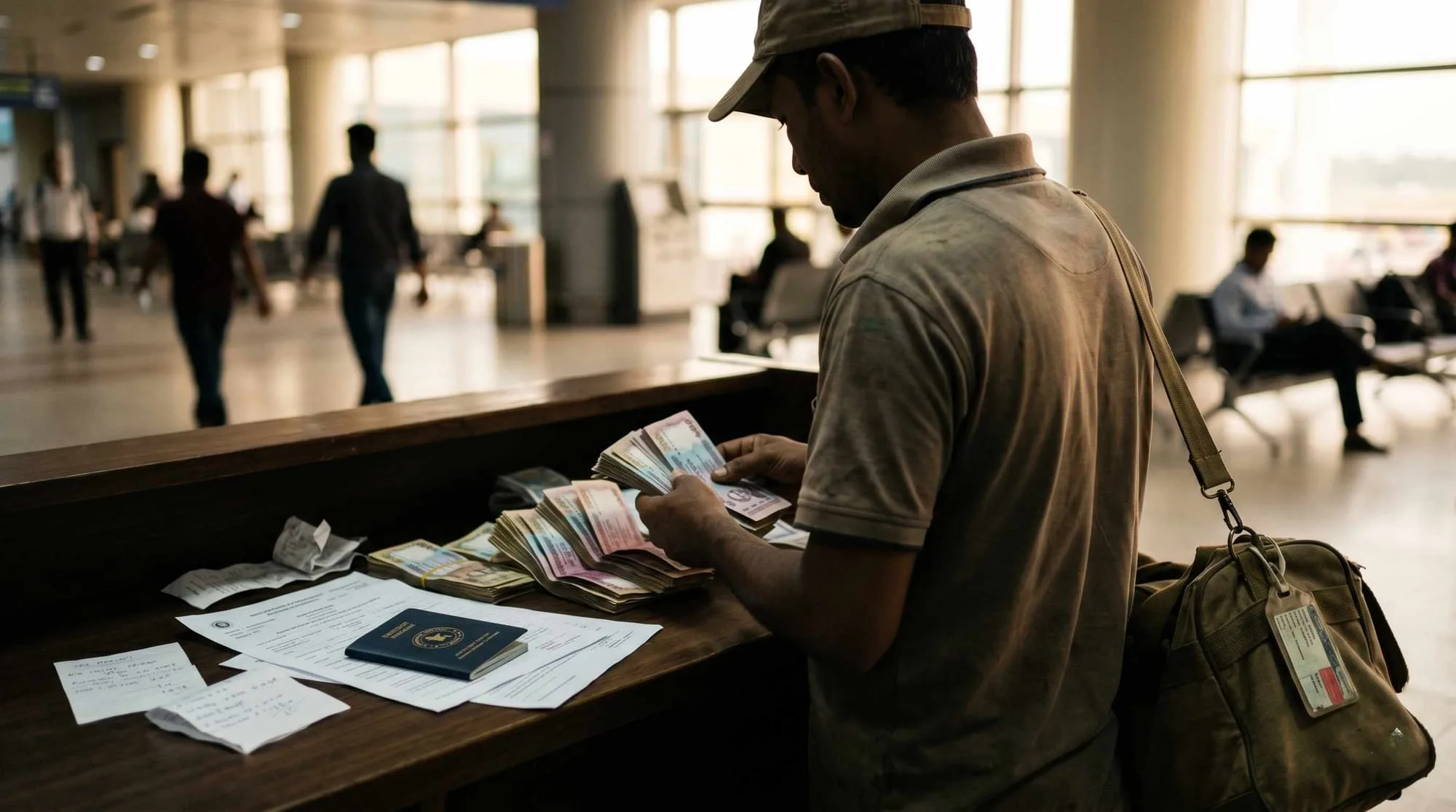

Bangladesh’s private commercial banks have quietly become the dominant engine of the country’s remittance infrastructure — capturing over 70% of all inflows in the first 14 days of September 2024, as expatriates increasingly route their earnings through regulated banking channels and away from informal transfer networks.
The Banking Sector Breakdown: Who Is Receiving Bangladesh’s Remittances
Bangladesh Bank data from the first two weeks of September 2024 reveals a remittance landscape decisively shaped by private commercial institutions. Of the $1.167 billion that entered the formal banking system between September 1 and September 14, private banks alone absorbed $816.94 million. State-owned banks received $297.27 million, while specialised banks accounted for $4.99 million. Foreign banks, by contrast, received just $30,000 — a figure that illustrates how thoroughly private institutions have come to define Bangladesh’s formal remittance infrastructure.
| Bank Category | Remittance Received (USD) | Share of Total |
|---|---|---|
| Private Banks | $816.94 Million | ~70.1% |
| State-Owned Banks | $297.27 Million | ~25.5% |
| Specialised Banks | $4.99 Million | ~0.4% |
| Foreign Banks | $30,000 | <0.01% |
| Total (14 Days) | $1.167 Billion | 100% |
Why Private Banks Have Pulled Ahead
Expanded Diaspora Outreach
Private banks have significantly broadened their reach into Bangladeshi diaspora communities abroad. This expanded presence has made it easier and more familiar for expatriate workers to channel earnings directly through private banking networks, contributing to the sector’s commanding share of formal remittance inflows.
Shift Away From Informal Channels
Increased awareness campaigns have redirected expatriate remittances from informal hundi networks toward regulated banking institutions. Private banks, with their wider branch and agent networks, have been the primary beneficiaries of this structural shift in transfer behavior among Bangladeshi workers abroad.
Consistent Weekly Performance
Bangladesh Bank data shows remittance inflows were steady across both weeks of the tracked period. The first week yielded $584.54 million while the second week — spanning September 8 to 14 — brought in $582.66 million, reflecting a reliable and stable flow rather than a one-time spike, which strengthens the case that private bank dominance is structural, not incidental.
Sustained Momentum From Prior Months
June 2024 had set a three-year remittance high of $2.542 billion. After a dip to $1.91 billion in July, inflows rebounded to a record August figure of $2.2213 billion. September’s early pace — averaging $83.4 million per day — places it firmly on track to match or exceed June’s benchmark, with private banks driving the recovery at every stage.
Remittance Monthly Trajectory: June to September 2024
June 2024
Remittances reach a three-year high of $2.542 billion, driven by strong diaspora engagement with formal banking channels. Private banks lead inflows.
July 2024
Inflows decline to $1.91 billion — the lowest in 10 months — reflecting transitional uncertainty. The dip underscores the sensitivity of remittance flows to domestic conditions.
August 2024
Following the formation of Bangladesh’s interim government, remittances rebound sharply to $2.2213 billion — the highest August figure on record. Private banks absorb the bulk of returning inflows.
September 2024 (First 14 Days)
$1.167 billion received at a daily average of $83.4 million. Private banks account for over 70% of all inflows. Full-month total projected to exceed $2.5 billion.
What This Means for Bangladesh’s Foreign Currency Stability
The concentration of remittance inflows within private commercial banks carries meaningful implications for Bangladesh’s broader financial system. When the majority of foreign earnings enter through regulated institutions, those funds are more readily available to support the country’s foreign exchange reserves, stabilise the taka, and flow into productive economic activity. The consistency of the week-on-week figures — $584.54 million in week one and $582.66 million in week two — suggests that private banks are not simply capturing a temporary surge but are now functioning as the reliable, structural backbone of Bangladesh’s remittance economy. With September’s full-month total projected to exceed $2.5 billion, policymakers and financial institutions have increasing grounds for confidence that the formal remittance channel is deepening — and that private banks will remain at its center.