

476,000 Workers Later: Is Bangladesh's Malaysia Migration System Delivering on Its Promises?
The 2021 MoU sent 476,672 Bangladeshi workers to Malaysia via 101 approved agencies and the digital FWCMS platform. While designed for transparency, political pressure allowed unlisted associate agencies to join, inflating migration costs to 500,000 BDT. Experts urge removing these intermediaries.


- The December 2021 MoU reopened Malaysia's labor market to Bangladeshi workers under a structured, agency-controlled framework.
- 476,672 workers were deployed between August 2022 and May 2024 — the largest structured migration wave between the two countries.
- Recruitment was authorized through 101 approved agencies, including the state-run BOESL, supported by Malaysia's FWCMS digital platform.
- Associate agency involvement — permitted under ministry pressure — inflated migration costs, with some workers paying 500,000 BDT or more.
- Experts recommend eliminating intermediary agencies and restoring full authority to quota-approved agencies to reduce costs and restore transparency.
A Historic Wave — But At What Cost?
What the Framework Was Designed to Do
The 101-Agency Expansion
Following a joint working group meeting in June 2022, recruitment commenced through 25 approved Bangladeshi agencies. The list was subsequently expanded to 101 agencies including BOESL. The expansion enabled online verification across the full recruitment pipeline and facilitated the largest structured wave of migration between the two countries.
The FWCMS Platform
Malaysia's Foreign Workers Centralized Management System is a fully automated, cross-ministry digital platform integrating every step of the worker recruitment process. It was introduced under the 2016 G2G Plus MoU specifically to close the procedural gaps that manual processing had long left open and to restore employer and government confidence in Bangladeshi worker recruitment.
The Associate Agency Problem
Unlisted agencies excluded from the approved framework organized protests and generated political pressure on the ministry. In response, approved agencies were permitted to bring unlisted agencies in as associate partners. This reopened the vulnerability the controlled system had been designed to close, with migration costs for some workers climbing to 500,000 BDT or more.
The Path Forward
Available data recommends eliminating intermediary and associate agencies from the recruitment supply chain and restoring full operational authority to quota-approved agencies. Direct management of the pipeline by approved agencies is identified as the most effective path to reducing migration costs and restoring the transparency the FWCMS-based system was originally built to guarantee.
A Decade of Groundwork Behind the Numbers
The Malaysian market effectively closes to Bangladeshi general workers following widespread passport forgery, illegal entry, and broker-driven irregularities that eroded employer and government confidence.
A Government-to-Government agreement reopens the market. Despite a 30,000-worker quota, only approximately 9,000 workers migrate — demonstrating that structural frameworks alone cannot generate migration flows without genuine employer demand.
Bangladesh and Malaysia sign a new MoU establishing the G2G Plus model, authorizing up to ten private recruiting agencies alongside government channels and introducing the FWCMS digital platform.
A new MoU is signed to reopen the Malaysian labor market. Bangladesh agrees to allow Malaysia to select licensed agencies through an automated online system, laying the foundation for the 101-agency framework.
Recruitment commences through 25 approved Bangladeshi agencies following a joint working group meeting. The approved agency list is subsequently expanded to 101 agencies including BOESL.
476,672 Bangladeshi workers are deployed to Malaysia under the expanded framework, representing the largest structured migration wave between the two countries.
Policy Intent vs. Ground Reality
Source: NewsAxis
More to Read
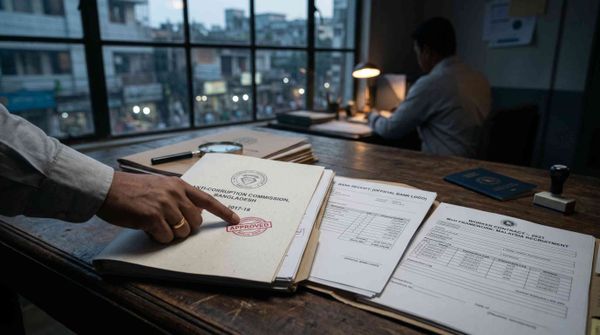
Anti-Corruption Commission Cleared Listed Agencies in 2017–18 — Why That Finding Matters Now
An Anti-Corruption Commission investigation conducted in 2017–18 found no evidence that listed Bangladeshi recruiting agencies were involved in visa trading or illegal transfer of funds to Malaysia — a finding that directly undermines claims circulating in current media coverage of the sector.
Four Reforms That Could Cut Bangladesh's Malaysia Migration Costs by 50% — And Keep the Corridor Open
Three decades of evidence point to four structural reforms that could cut Bangladesh's Malaysia migration costs by 50% — but the corridor's future hinges on one variable no policy framework can guarantee: political will.
Wang Kelian's Mass Graves: The Human Cost of Closing Bangladesh's Legal Migration Corridor to Malaysia
Wang Kelian's jungle graves — 139 mass graves, ~130 dead Bangladeshis and Rohingyas — exposed the lethal cost of closing legal migration corridors. When Bangladesh's Malaysia labour route shut in 2009, trafficking syndicates filled the void.
Comments