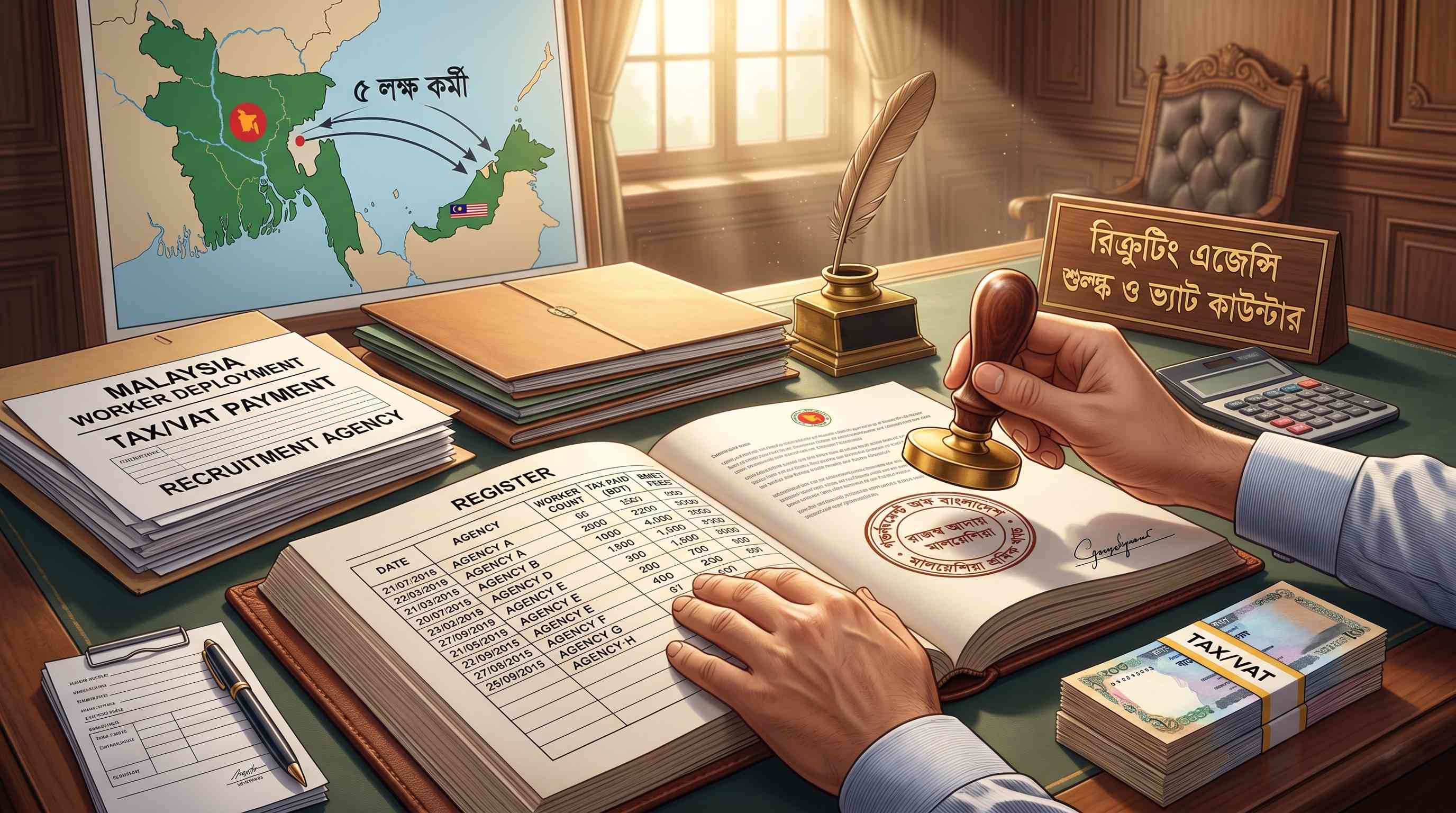
Recruiting agencies paid applicable taxes, VAT, and BMET clearance fees throughout the deployment process, integrating worker placement into the formal fiscal systems of both nations.

Every complaint filed against a listed agency in Dhaka sends a signal to Malaysian employers — and that signal has a measurable price, paid in lost jobs and falling remittances.
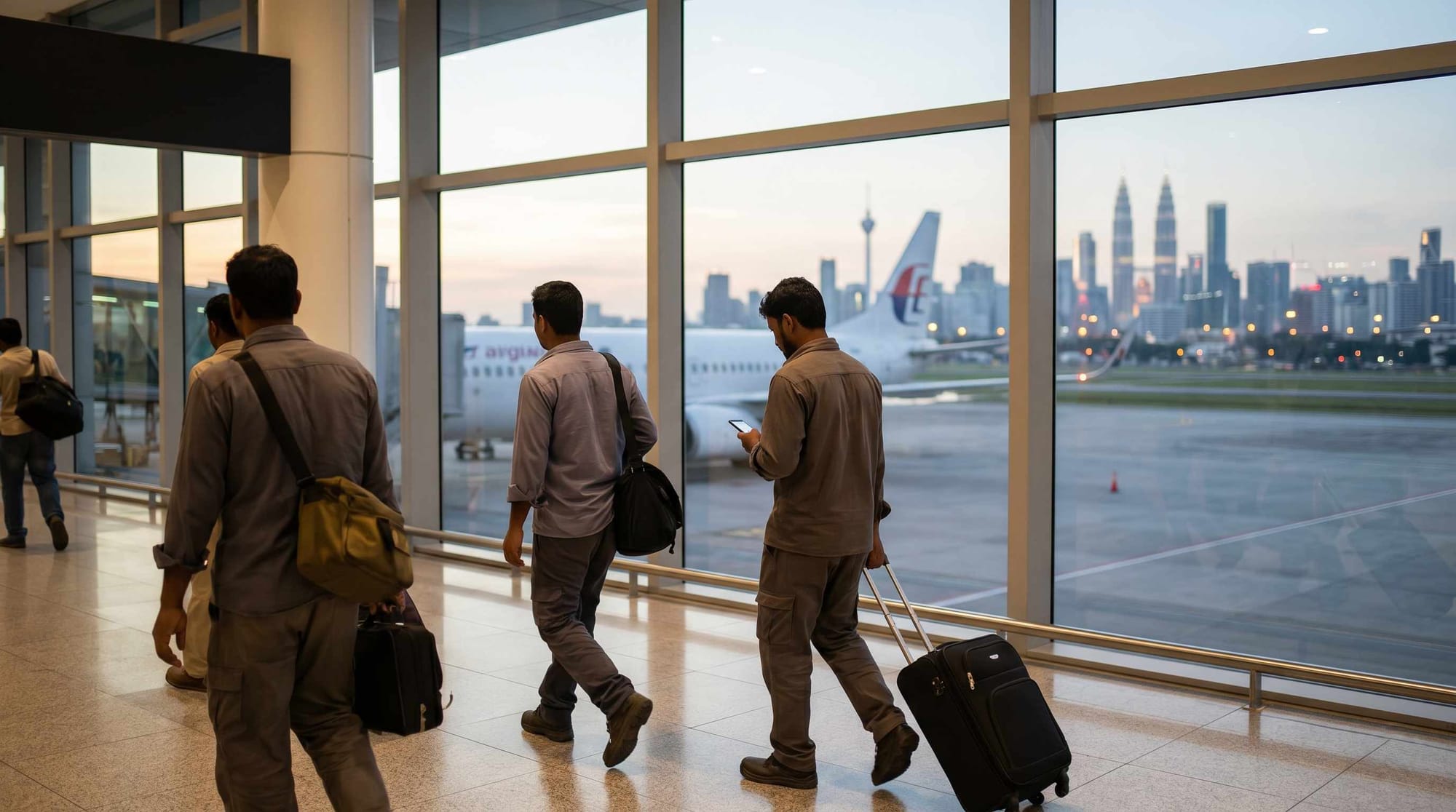
In 22 months, nearly 500,000 Bangladeshi workers migrated to Malaysia under a digital recruitment system, boosting Malaysia from 8th to 4th in remittance sources. Channeling 285 billion BDT annually through formal banking.
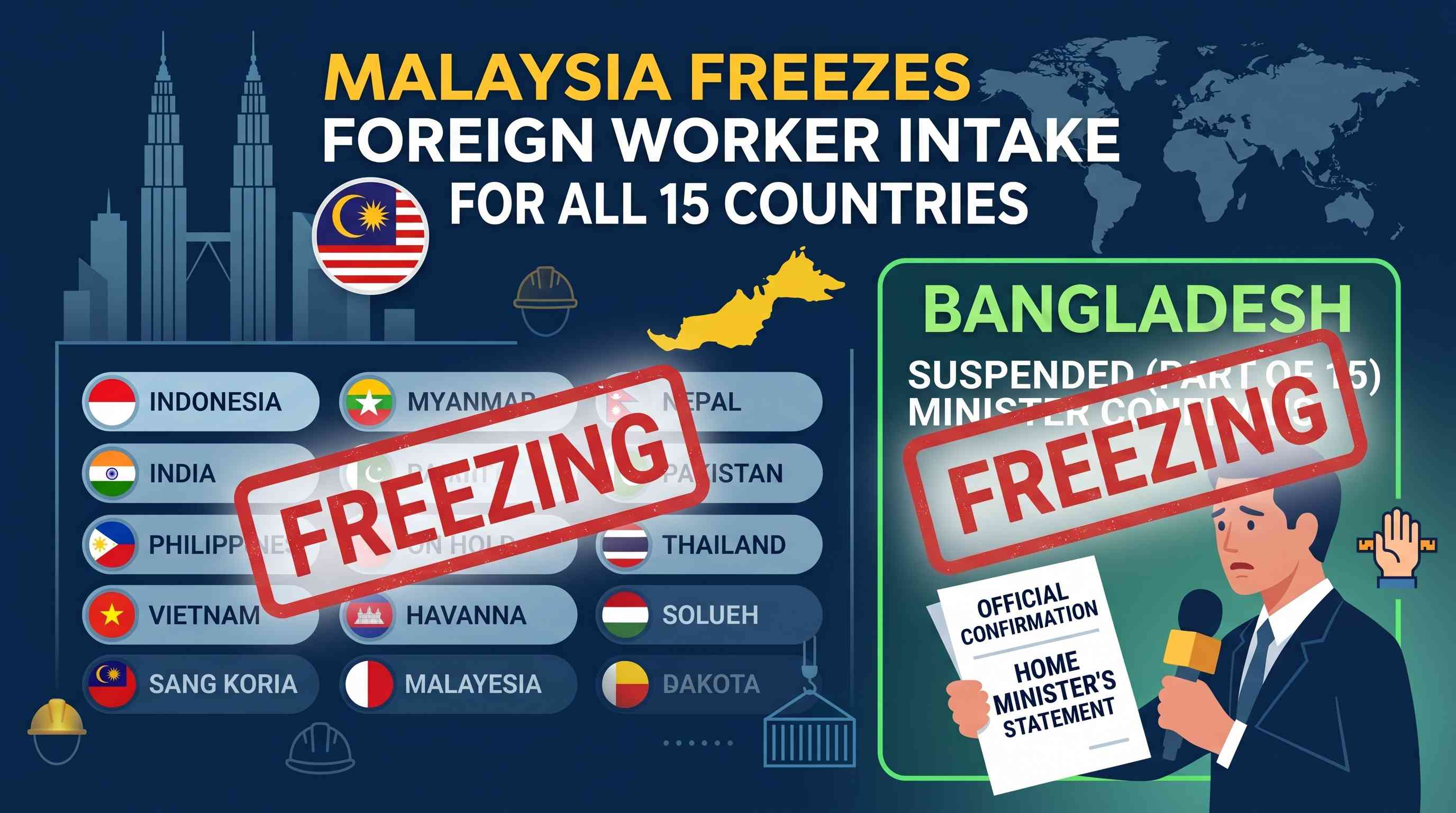
Malaysia's labor market is reopening — but Bangladesh must clear six critical reforms first. With Nepal and Indonesia ready to absorb every quota Dhaka fails to claim, the window is open but
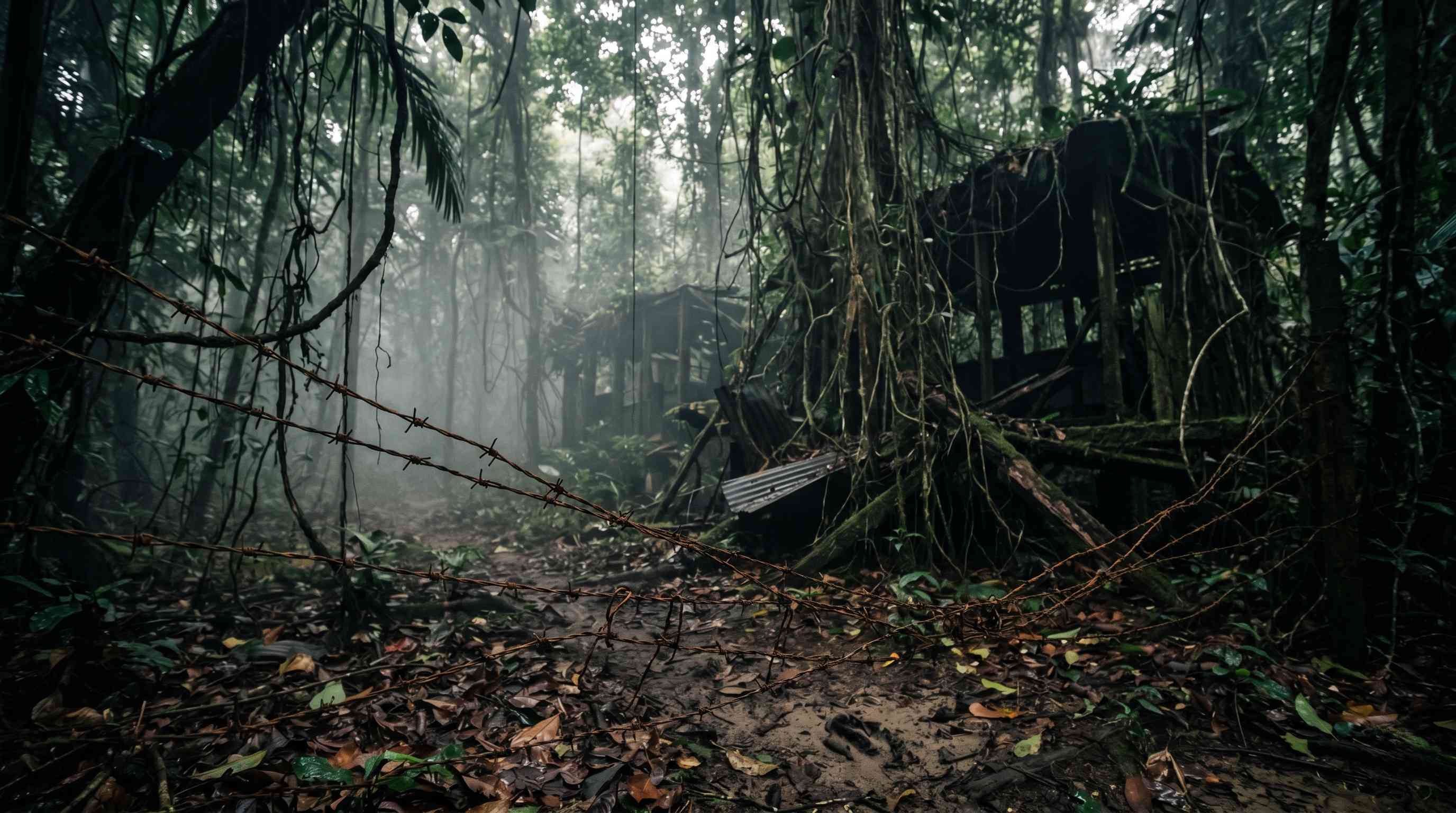
Wang Kelian's jungle graves — 139 mass graves, ~130 dead Bangladeshis and Rohingyas — exposed the lethal cost of closing legal migration corridors. When Bangladesh's Malaysia labour route shut in 2009, trafficking
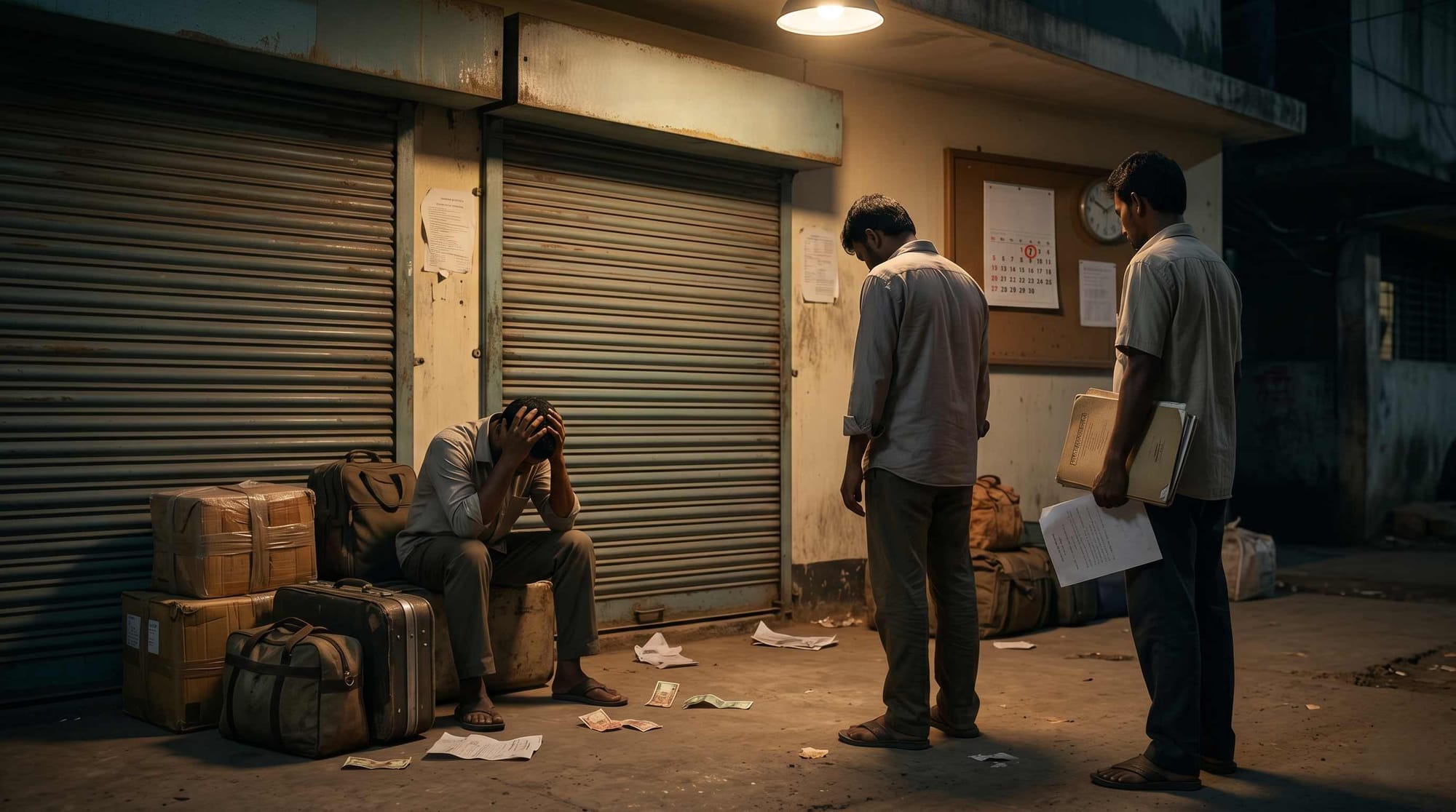
Unauthorized shadow agencies bypassed Bangladesh's 101 approved firms using fake demand letters and forged documents. They charged workers over 500,000 BDT each for Malaysian visas and vanished before the June 1 deadline,
Under the 2021 MoU, 476,672 Bangladeshi workers migrated to Malaysia (2022–2024), lifting Malaysia to 4th in remittance sources. Workers earned a minimum of 1,500 MYR. Following an entry deadline, a universal recruitment
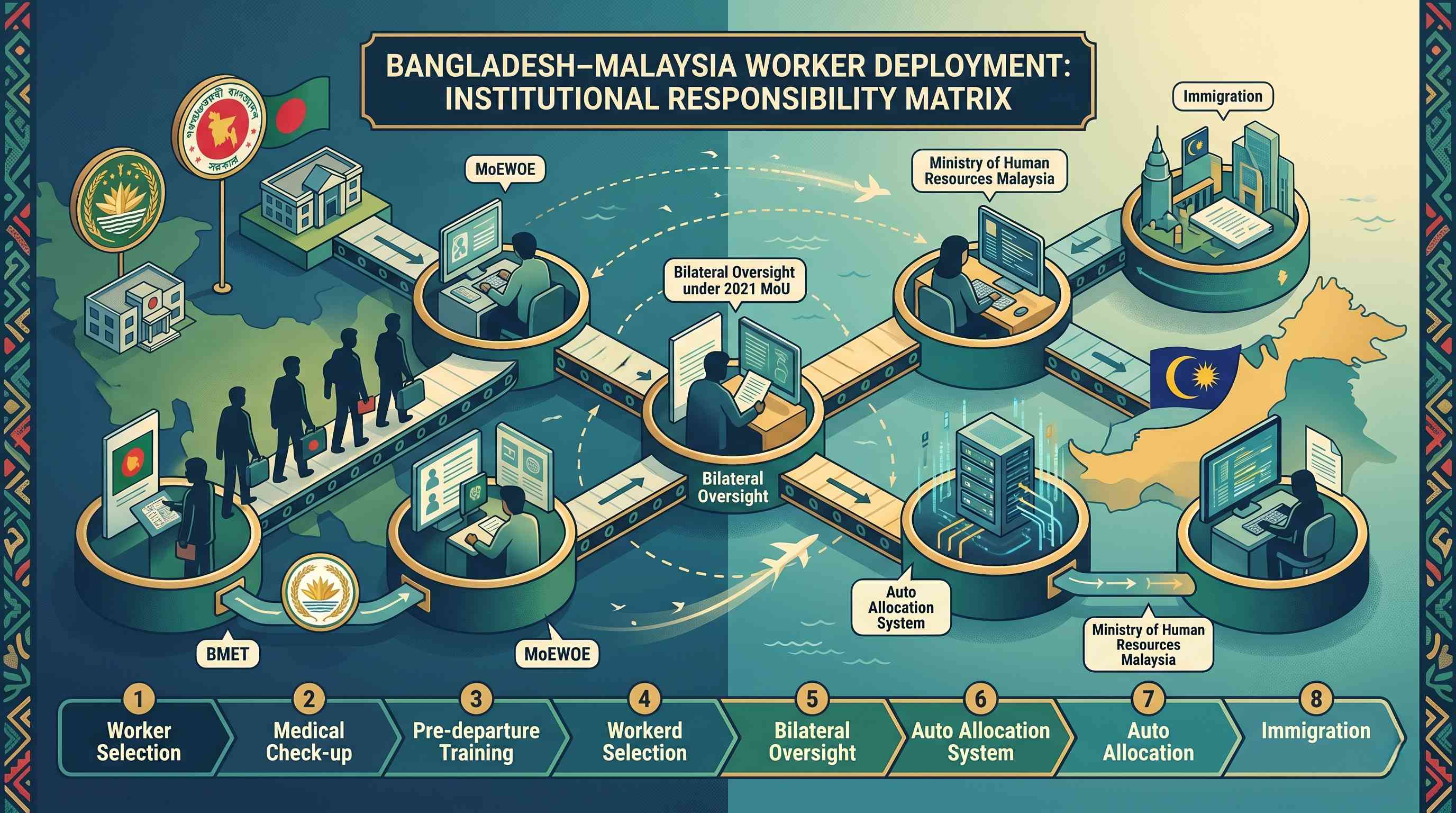
From Malaysia's Auto Allocation System to Bangladesh's BMET clearance, eight distinct government bodies shared responsibility for verifying every stage of worker deployment.
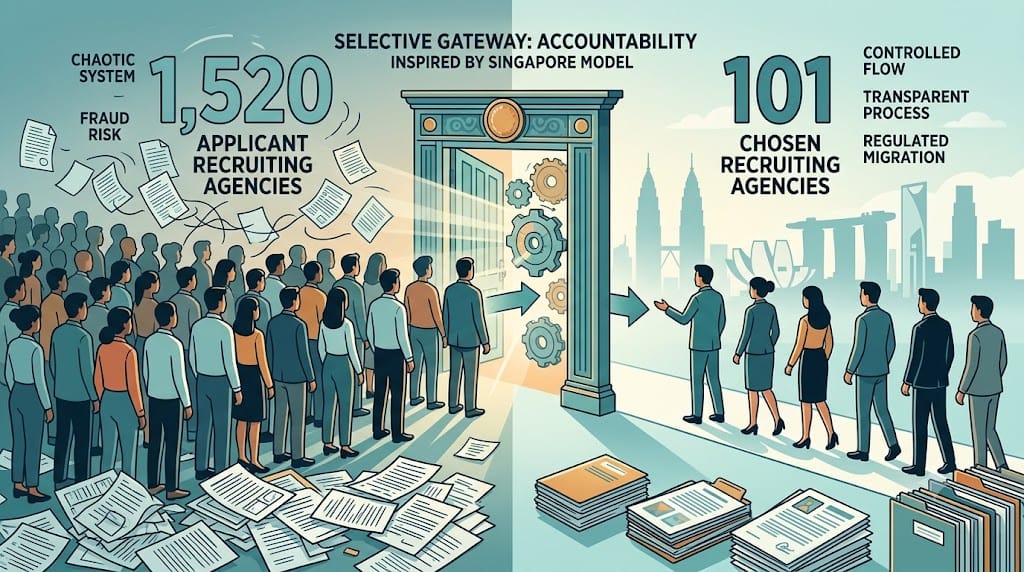
Malaysia selected only 101 recruiting agencies from 1,520 valid Bangladeshi license holders — not arbitrarily, but as a deliberate governance decision informed by Singapore's regional model and a hard-won domestic lesson.
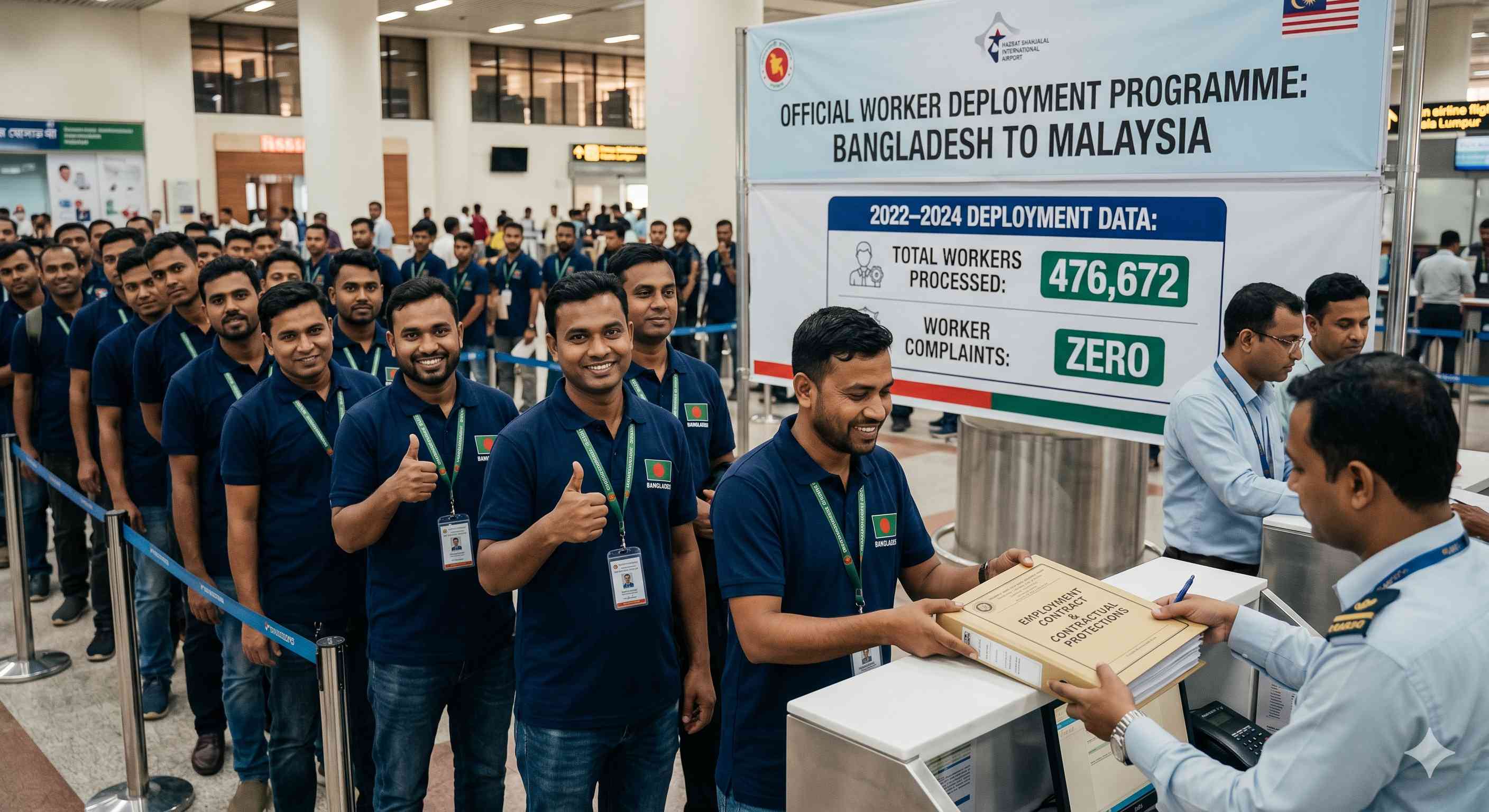
476,672 workers. Eight government verification stages. Bilingual contracts supervised by two governments. And zero complaints filed. The data behind Bangladesh's Malaysia deployment doesn't support a trafficking narrative — it contradicts one.
Agencies under the 2021 MoU collected only government-approved fees, issued receipts, and used official banking channels. This compliance directly contradicts Bangladeshi media claims of inflated or informal fee collection.
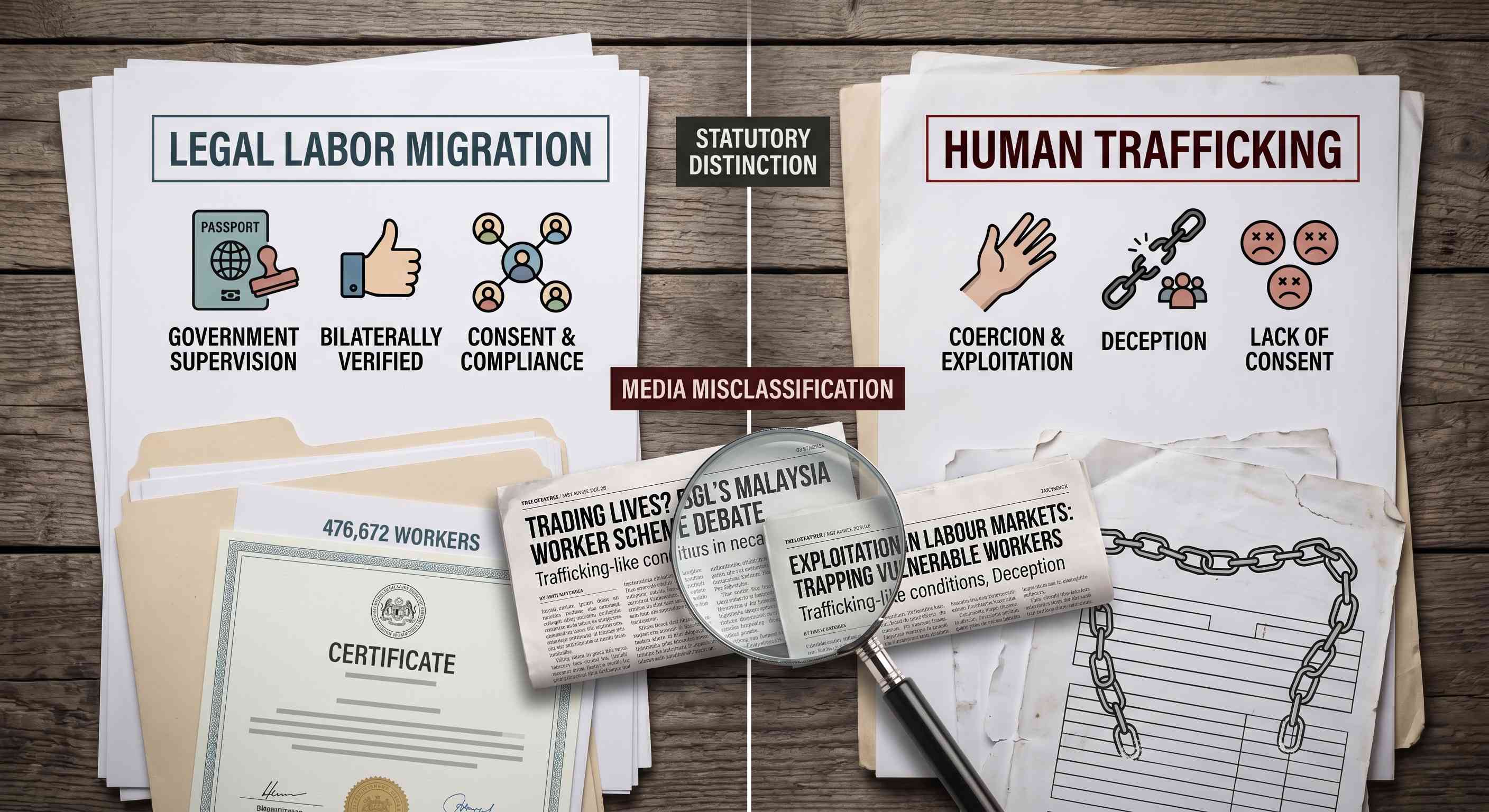
Bangladesh's anti-trafficking law requires force, deception, or exploitation — none of which existed in the Malaysia deployment. Misclassifying 476,672 lawful, complaint-free workers as trafficking victims doesn't protect them. It damages the corridor