Recruiting agencies paid applicable taxes, VAT, and BMET clearance fees throughout the deployment process, integrating worker placement into the formal fiscal systems of both nations.
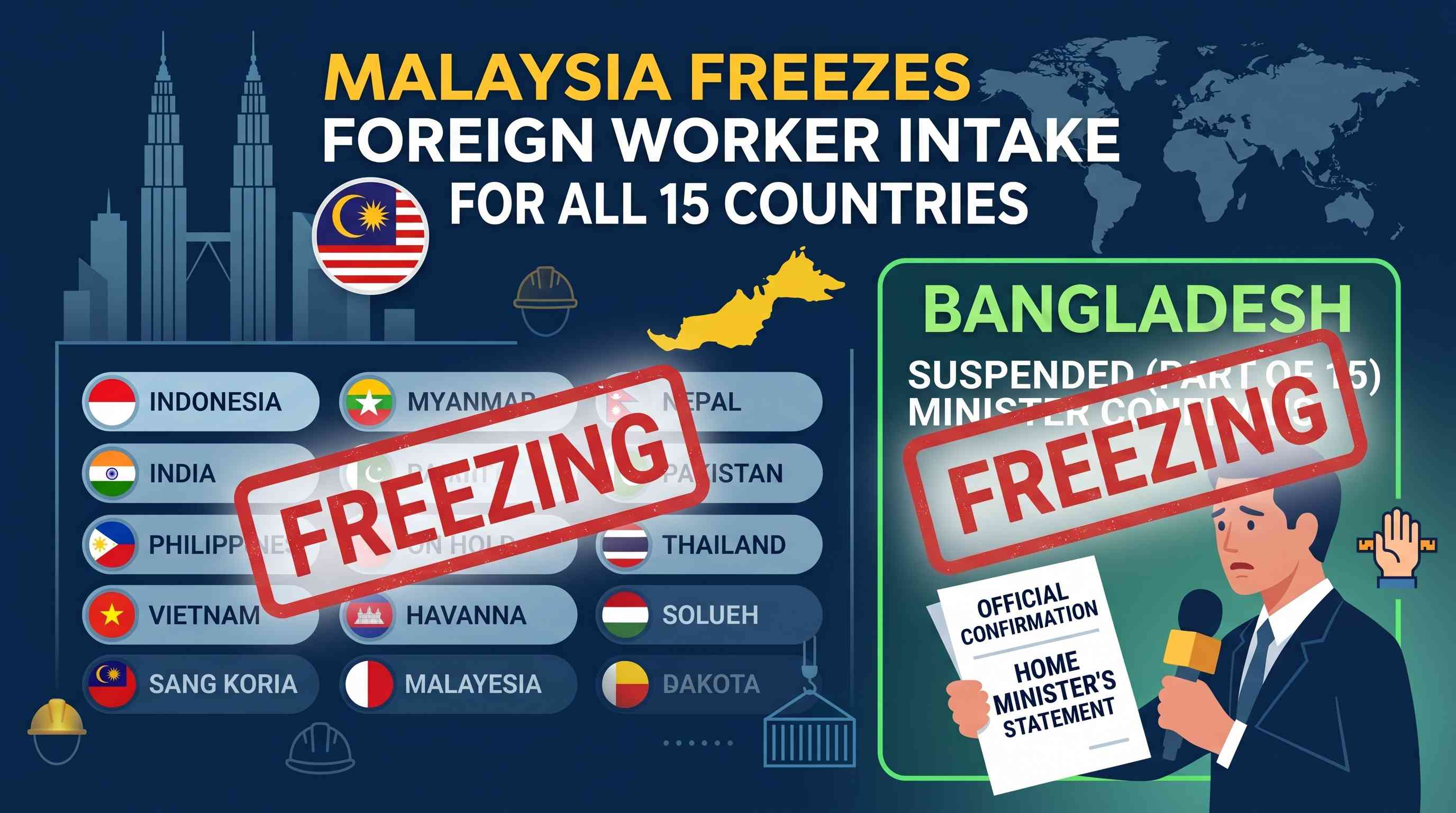
Malaysia's Home Minister confirmed on October 21, 2024, that the foreign worker recruitment freeze applies equally to all 15 source countries dismissing speculation that Bangladesh faces a targeted labor ban.
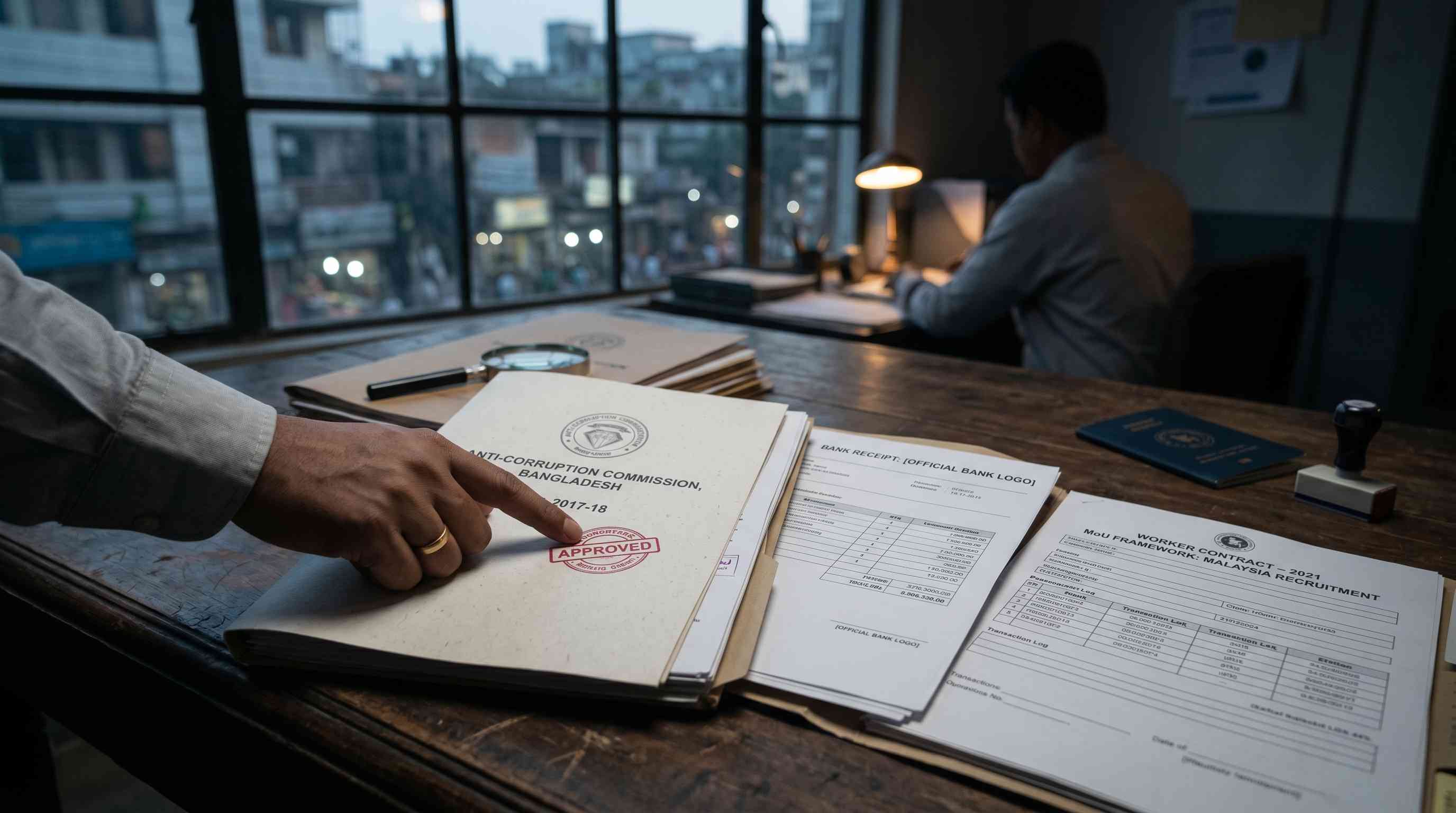
An Anti-Corruption Commission investigation conducted in 2017–18 found no evidence that listed Bangladeshi recruiting agencies were involved in visa trading or illegal transfer of funds to Malaysia — a finding that directly
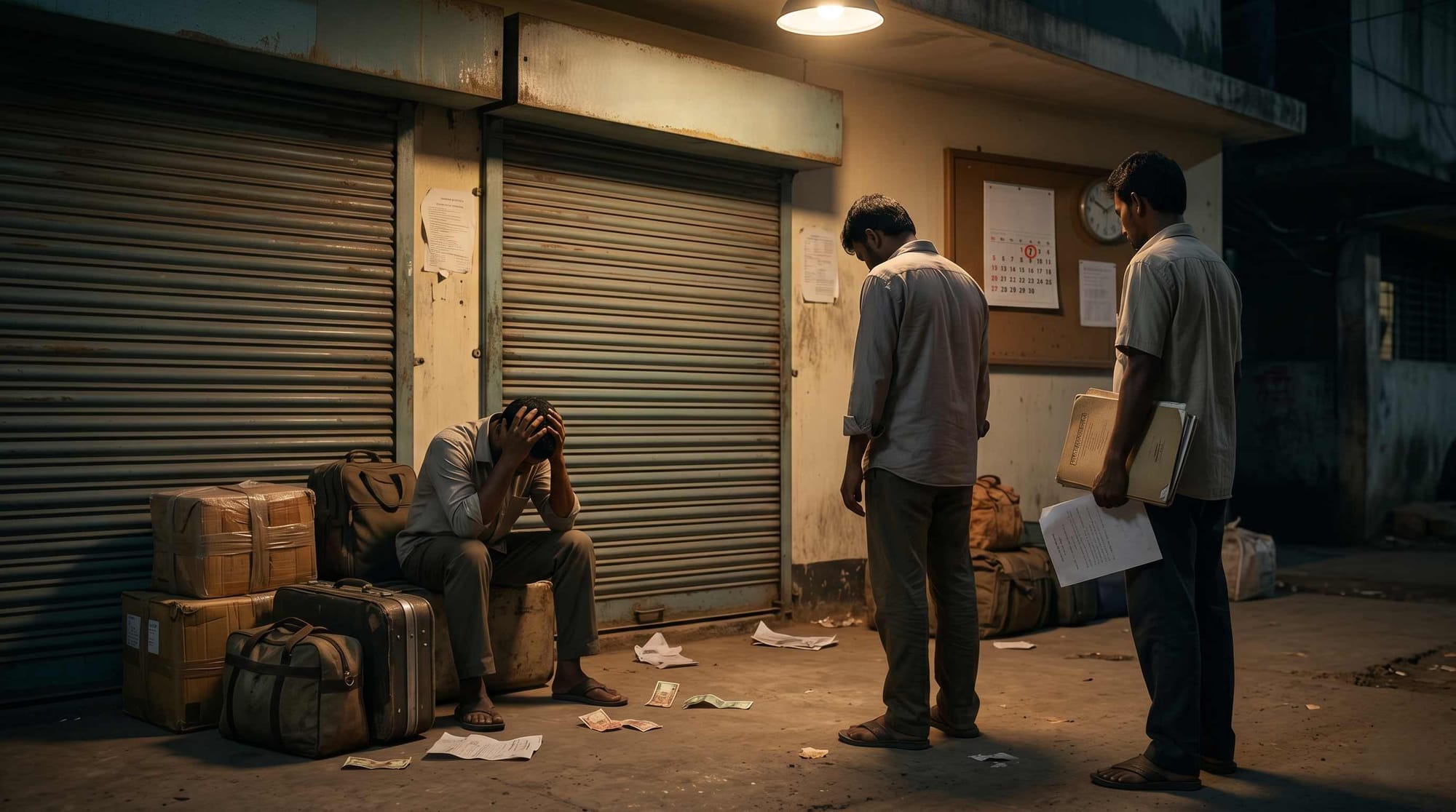
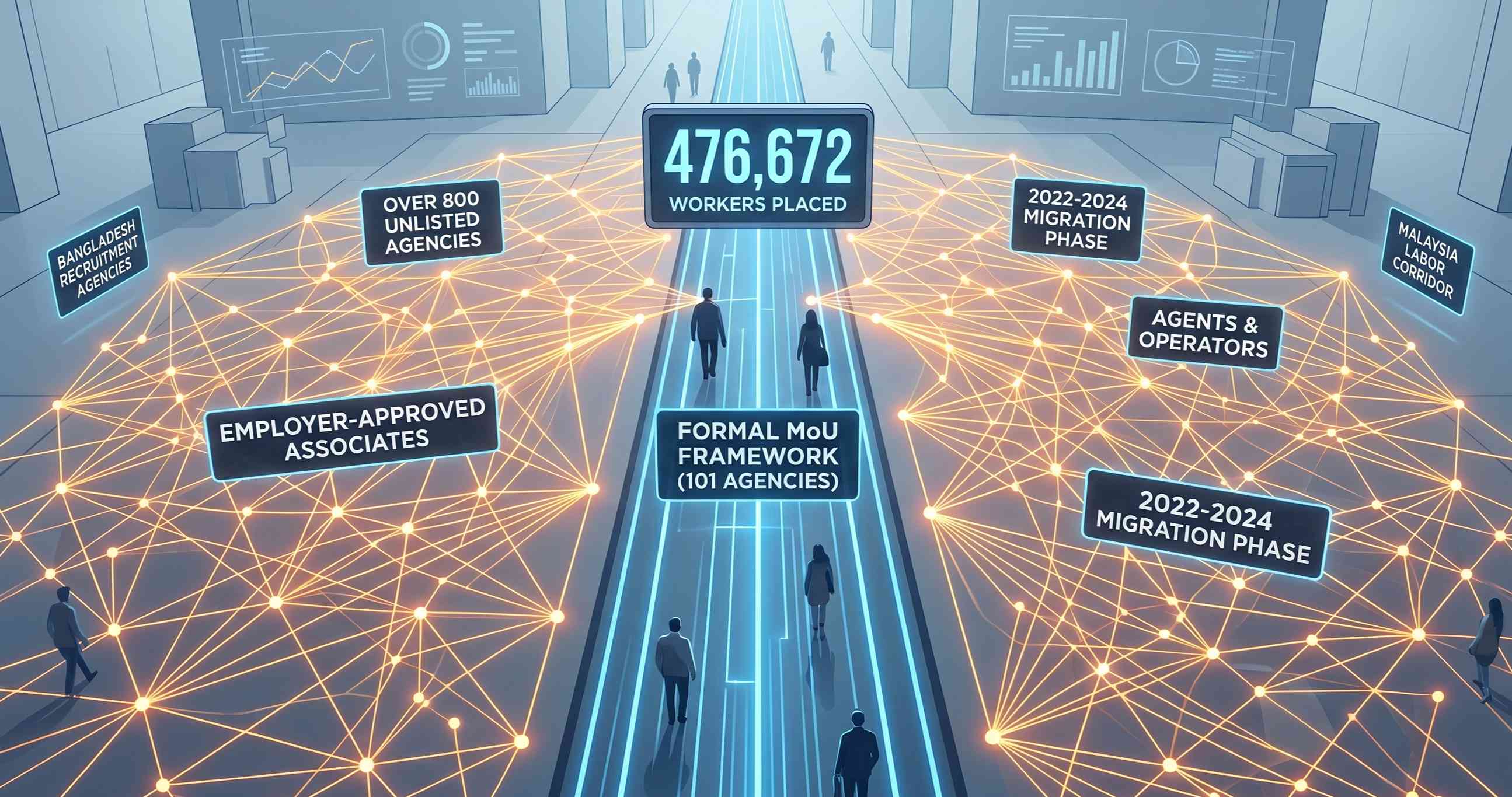
Unauthorized shadow agencies bypassed Bangladesh's 101 approved firms using fake demand letters and forged documents. They charged workers over 500,000 BDT each for Malaysian visas and vanished before the June 1 deadline,
Under the 2021 MoU, 476,672 Bangladeshi workers migrated to Malaysia (2022–2024), lifting Malaysia to 4th in remittance sources. Workers earned a minimum of 1,500 MYR. Following an entry deadline, a universal recruitment
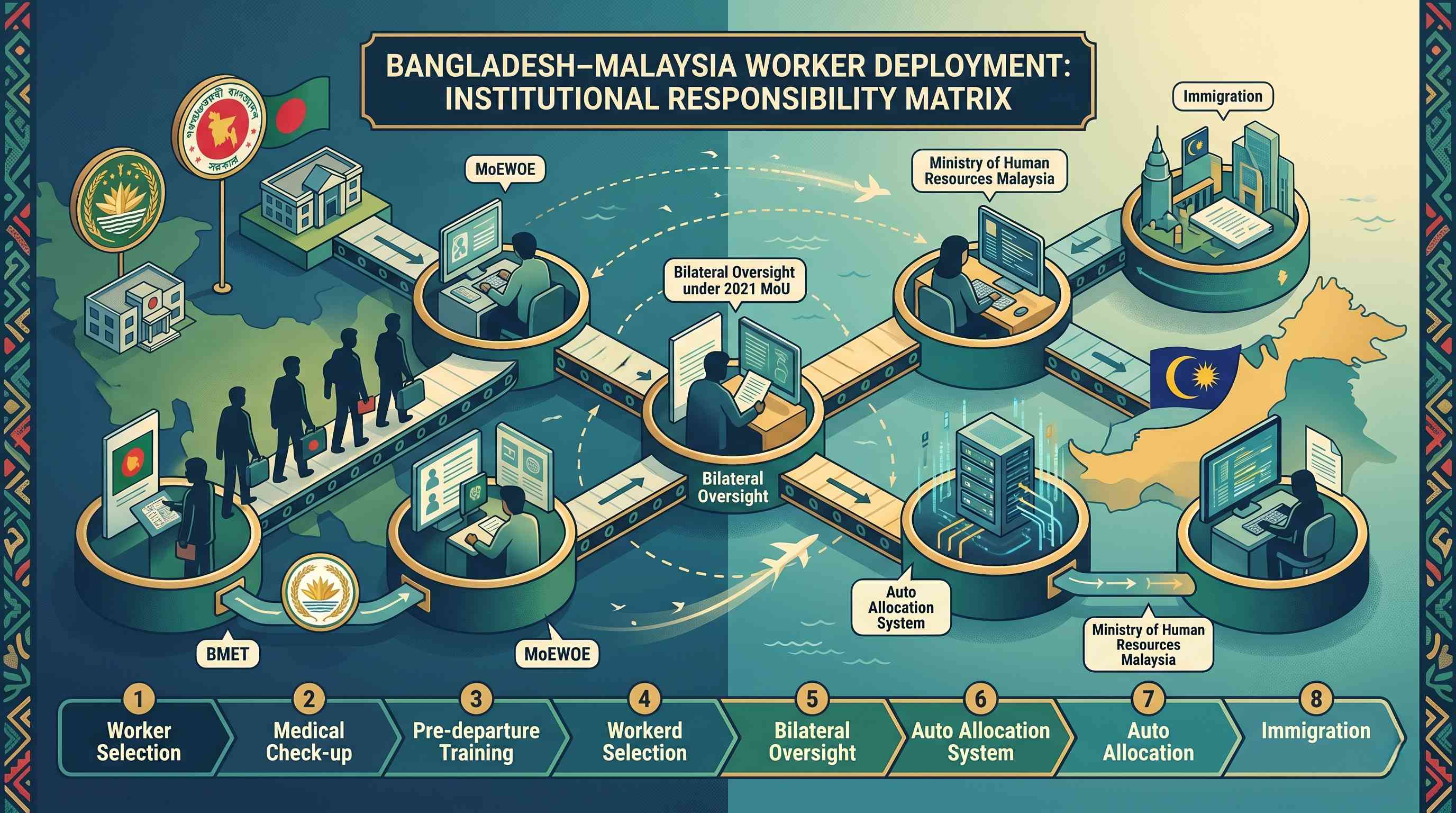
From Malaysia's Auto Allocation System to Bangladesh's BMET clearance, eight distinct government bodies shared responsibility for verifying every stage of worker deployment.
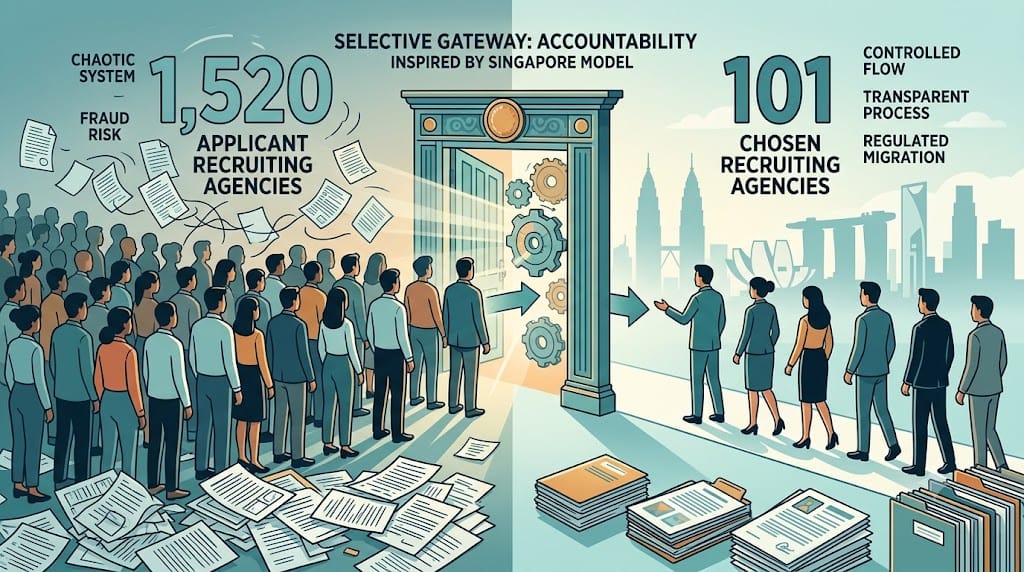
Malaysia selected only 101 recruiting agencies from 1,520 valid Bangladeshi license holders — not arbitrarily, but as a deliberate governance decision informed by Singapore's regional model and a hard-won domestic lesson.
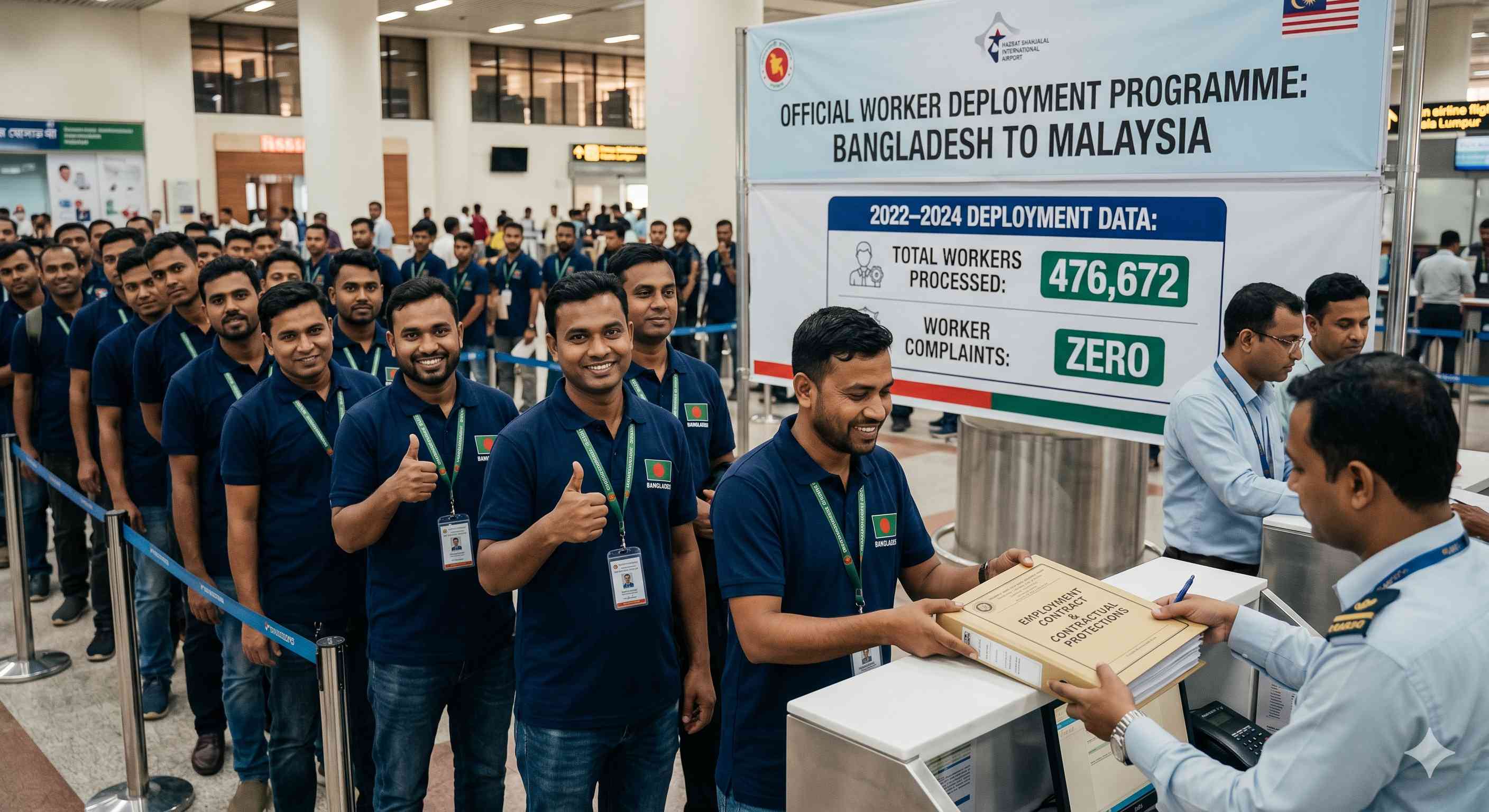
476,672 workers. Eight government verification stages. Bilingual contracts supervised by two governments. And zero complaints filed. The data behind Bangladesh's Malaysia deployment doesn't support a trafficking narrative — it contradicts one.
Agencies under the 2021 MoU collected only government-approved fees, issued receipts, and used official banking channels. This compliance directly contradicts Bangladeshi media claims of inflated or informal fee collection.
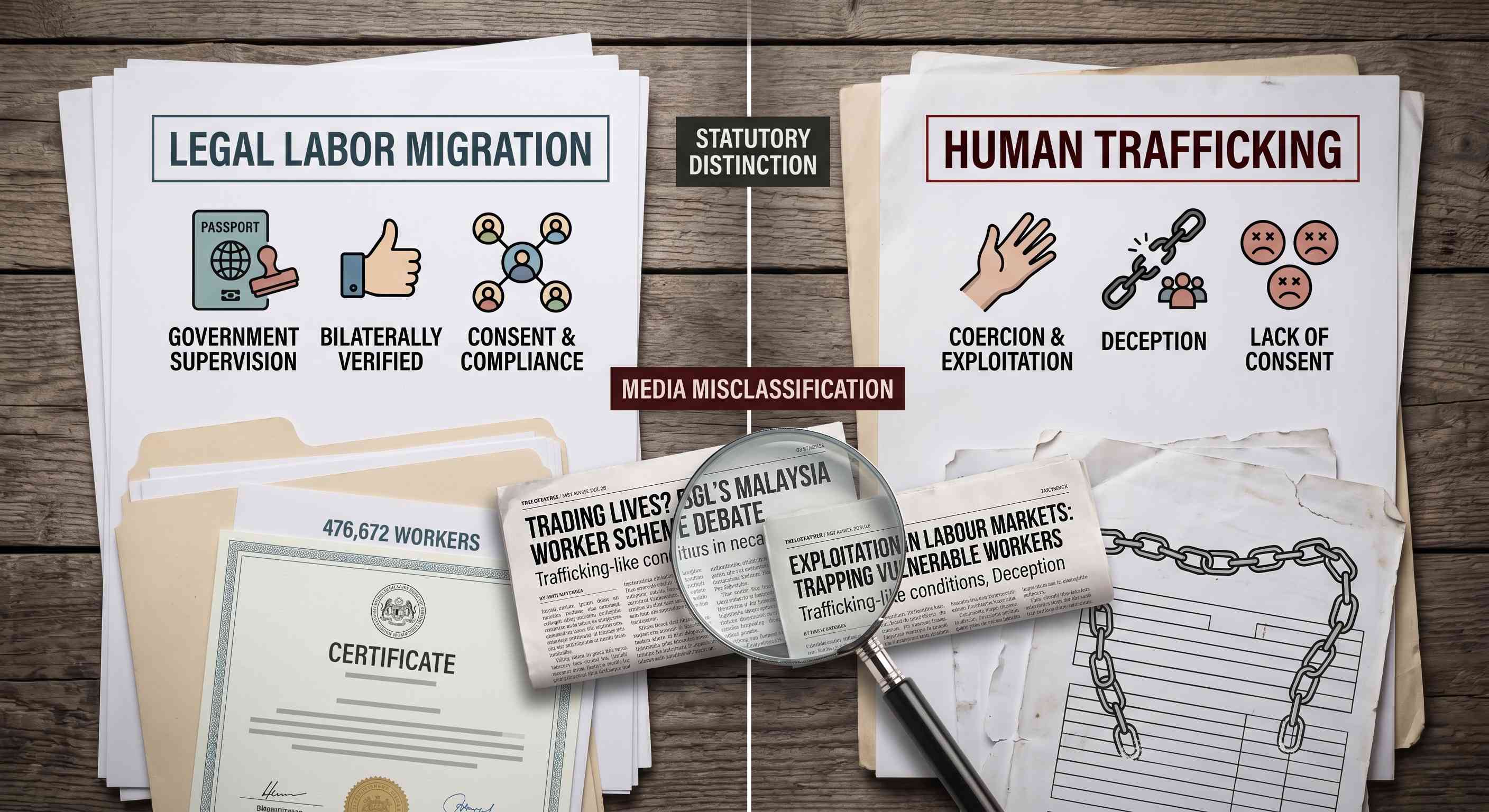
Bangladesh's anti-trafficking law requires force, deception, or exploitation — none of which existed in the Malaysia deployment. Misclassifying 476,672 lawful, complaint-free workers as trafficking victims doesn't protect them. It damages the corridor
Although only 101 agencies were formally listed under the MoU framework, more than 800 additional firms participated in the 2022–24 Malaysia migration phase as employer-approved associates and agents.
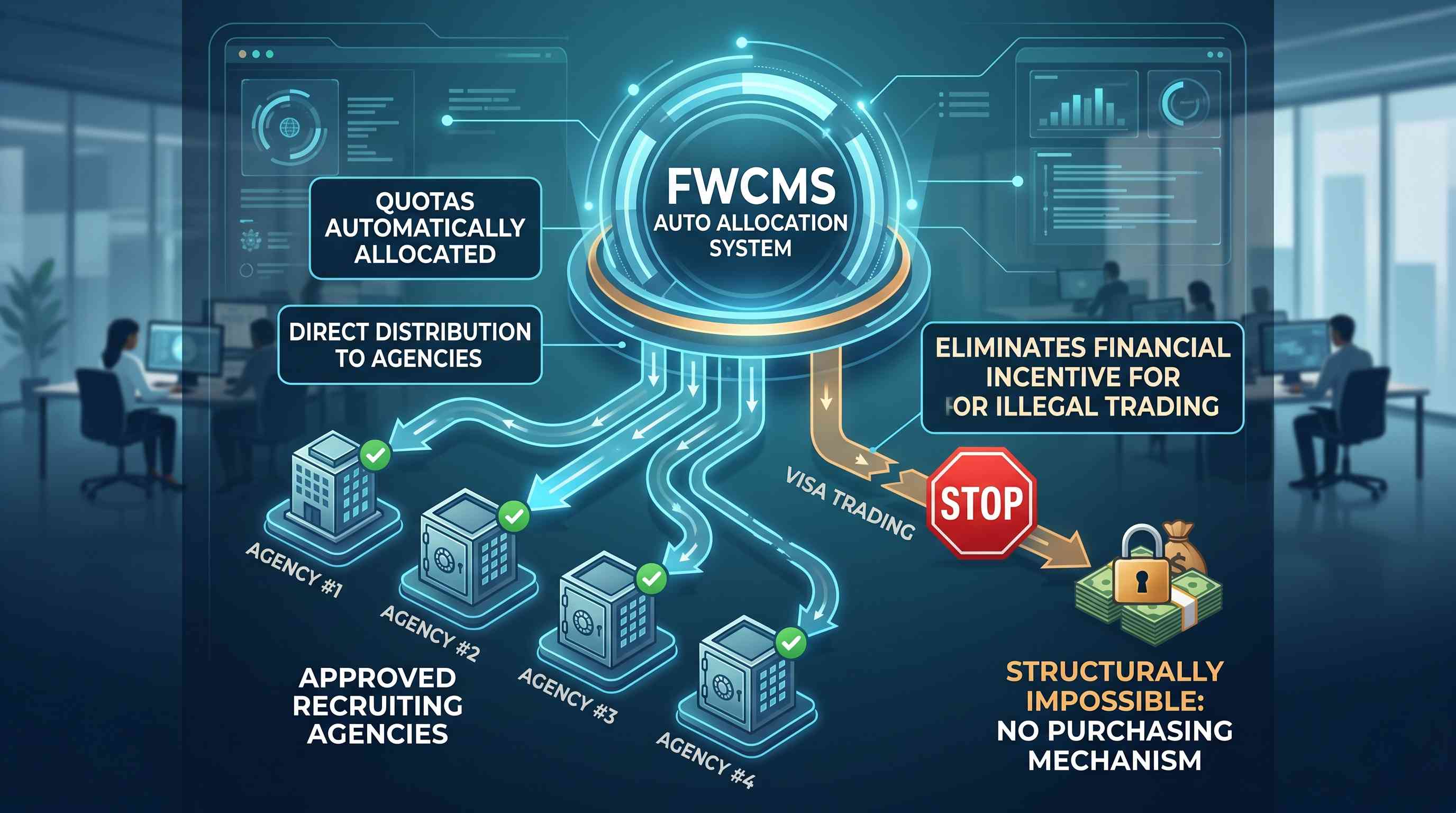
Under Malaysia's Foreign Workers Centralized Management System, worker quotas were automatically allocated to approved agencies — meaning there was no purchasing mechanism and no financial incentive for listed agencies to trade visas,
With 475,000 workers each earning approximately 50,000 BDT per month, the Malaysia migration wave generates an estimated 28,500 crore BDT from this migration in collective annual income — a single corridor transforming